Rent a Truck to Pull My Camper? Key Tips
So you’ve got a camper sitting in your driveway and no truck to pull it. That “can i rent a truck to pull my camper” question has been bouncing around your head for a while now. It makes sense, buying a heavy-duty truck just for a few trips a year is a huge expense, and borrowing from a friend isn’t always an option.
Here’s the thing though. Renting a truck to tow your camper isn’t as simple as walking into any rental lot and driving off with a pickup. As of 2026, major rental companies have tightened their towing policies significantly, and a surprising number of them flat-out prohibit towing anything at all.
Per SAE J2807 towing standards, a truck’s rated capacity means nothing if the rental contract says no. Let’s dig into what actually works and what doesn’t.
Quick Answer
Yes, you can rent a truck to pull your camper, but only from specific rental companies. Major car rental chains like Enterprise and Hertz generally prohibit towing with their pickup trucks. U-Haul allows towing but only with their own trailers.
Your best options are Penske or private rentals through Turo. Always verify the truck’s towing capacity and payload before booking.
Why This Answer Matters More Than You Think
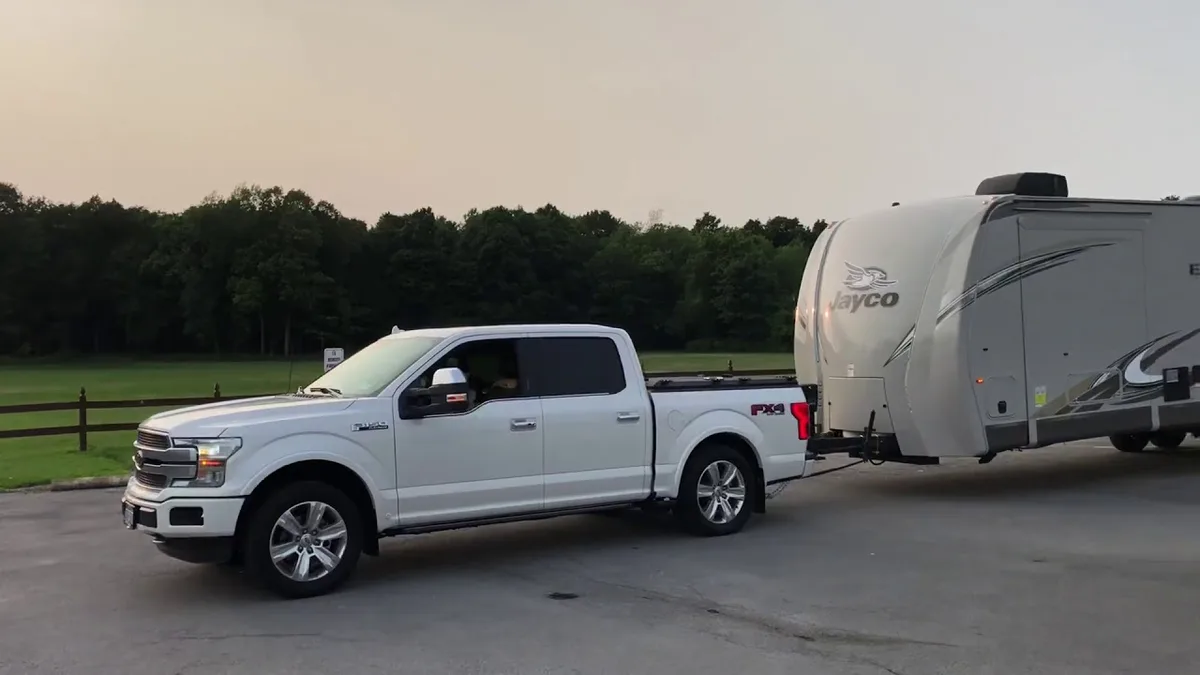
Image source: YouTube / gizmopilot
This isn’t just about finding any truck with a hitch. Towing a camper puts serious stress on a vehicle, and getting it wrong can cause thousands in damage or worse, a crash. We’ve looked at dozens of rental contracts, manufacturer towing guides, and real-world owner experiences to give you the straight facts.
The stakes are higher than most people realize. If you overload a rental truck’s payload, you risk blowing a tire or losing control on the highway. If you damage the transmission climbing a grade with an undersized truck, the rental company charges you full replacement cost.
And if your insurance doesn’t cover towing accidents with a rental, you’re personally liable for everything.
That’s why knowing the exact rules matters before you book anything.
The Short Answer: Can You Actually Rent a Truck to Pull a Camper?
The direct answer is yes, but with major caveats depending on who you rent from. Of the five largest rental companies in the United States, only two reliably allow towing with their pickup trucks, and one of those only lets you tow their own trailers.
Here’s the honest breakdown of where things stand as of 2026.
Enterprise, Hertz, and Budget, these three giants generally prohibit towing with their rental pickups. Their standard rental agreements explicitly list towing as a prohibited use. Some locations may make exceptions if you request a specific truck with a factory tow package, but that’s rare and never guaranteed.
Don’t count on it.
U-Haul, their pickup trucks can tow, but only U-Haul-branded trailers. You cannot rent a U-Haul pickup and hook up your personal camper to it. That’s a firm policy across all locations.
Penske, this is your best bet among traditional rental companies. Penske rents heavy-duty pickup trucks and explicitly allows towing. They even offer trucks with factory tow packages and integrated brake controllers on some models.
Turo, the peer-to-peer rental platform lets private owners set their own rules. Many truck owners on Turo allow towing, and you can filter listings to find ones that do. Just message the owner first to confirm and ask about their specific towing setup.
The Home Depot, their rental trucks are meant for hauling materials, not towing trailers. Do not use them for your camper.
Your Three Main Rental Options and Their Towing Rules
Each rental path has different rules, different levels of certainty, and different risks. Let’s walk through each so you know exactly what you’re getting into.
Major Car Rental Companies (Enterprise, Hertz, Budget)
These companies rent pickup trucks for daily use, but their standard contracts contain specific language prohibiting towing. We reviewed sample agreements from all three, and the wording is clear: “Vehicle may not be used to tow any trailer, vehicle, or other object.”
| Company | Pickup Available | Towing Allowed? | Notes |
|---|---|---|---|
| Enterprise | Ford F-150, Silverado 1500 | No, per contract | Some franchise locations may allow with manager approval |
| Hertz | Ford F-150, Ram 1500 | No, per contract | Rigid policy across corporate locations |
| Budget | Ford F-150 | No, per contract | Same parent company as Avis; similar restrictions |
A small number of franchise locations (independently owned) may allow towing if the manager approves it in writing. But you cannot rely on this when planning a trip. If you do get approval, have them add a note to the rental agreement and initial it.
Verbal promises won’t help if something goes wrong.
Truck-Specific Rental Companies (U-Haul, Penske)
These companies operate differently because their core business involves moving and hauling.
U-Haul rents pickup trucks at very low daily rates (around $20 per day) plus mileage. However, their pickup fleet is designed only for towing U-Haul trailers. The trucks come with a ball mount installed, but the hitch is set up for U-Haul’s coupler system.
You cannot hook your personal camper to it, and U-Haul will not allow it.
Penske is the standout option here. They rent heavy-duty pickup trucks (Ford F-250 and F-350) as well as half-ton models. Their rental agreement explicitly permits towing, and they offer trucks with properly equipped tow packages.
Penske also provides roadside assistance and includes unlimited miles on many rentals, which is unusual for a truck rental company.
Peer-to-Peer Rentals (Turo)
Turo connects you with individual truck owners. This gives you more flexibility but also more variability. Some owners equip their trucks specifically for towing and rent them out knowing that’s what people need.
Others explicitly ban towing in their listing rules.
The key advantage of Turo is you can see the exact truck you’ll get, its make, model, year, and features. You can read owner reviews from other renters who used it for towing. And you can message the owner directly to confirm their hitch setup and any special requirements.
The downsides are higher prices (typically $80 to $200 per day) and mileage limits. You also need to carefully read the insurance coverage, as Turo’s standard protection plans may not cover towing damage.
The Critical Numbers You Need Before You Call
Before you rent anything, you need two numbers from your camper and one number from the rental truck. Getting these wrong is the most common mistake people make.
Towing Capacity vs. Payload Capacity — Know the Difference
These terms get confused constantly, and the confusion can be dangerous.
Towing capacity is the maximum weight your truck can pull. That’s the trailer itself plus everything inside it. A Ford F-150 with the right engine and tow package can pull up to 13,200 pounds according to Ford’s official specs.
Payload capacity is the maximum weight your truck can carry in its cab and bed. That includes you, your passengers, your cargo, and the tongue weight of your trailer. A typical F-150 has a payload of 1,500 to 2,400 pounds.
Here’s where people mess up. You can have a trailer that weighs 8,000 pounds, well within a truck’s towing capacity. But if that trailer has a tongue weight of 1,200 pounds (about 15 percent of total weight), and you have four people in the cab totaling 600 pounds, and 200 pounds of gear in the bed, you’re at 2,000 pounds of payload.
If your truck’s payload rating is 1,800 pounds, you’re overloaded before you even hook up.
Always check payload first. It’s the number that catches most people off guard.
Your Camper’s Real Weight (Not the Sticker Weight)
Manufacturers list “dry weight” or “unloaded vehicle weight” for campers. That number is essentially useless for towing purposes because it doesn’t include batteries, propane tanks, water, food, clothing, or anything else you’ll actually bring.
The real number you need is the GVWR (Gross Vehicle Weight Rating) of your camper. That’s the maximum weight your camper is designed to carry, including everything inside it. For a safe calculation, assume your camper will weigh close to its GVWR when fully loaded.
For example, a popular 24-foot travel trailer might have a dry weight of 4,500 pounds and a GVWR of 6,500 pounds. If you plan for 6,500 pounds, you’ll have a safety margin. If you plan for 4,500 pounds, you’re risking an overload situation on your first real trip.
Write down your camper’s GVWR and its actual loaded tongue weight. You’ll need both when you talk to the rental company.
Where Most Renters Get Stuck: The Hitch Problem
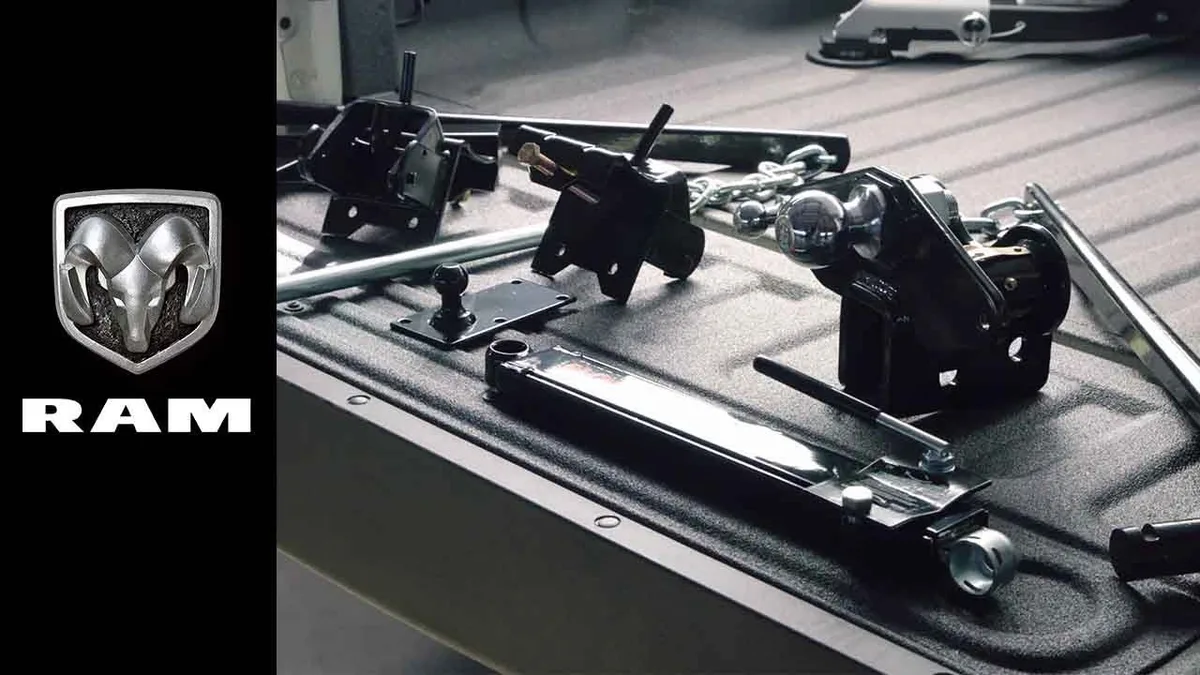
Image source: YouTube / Ram Trucks
You’d assume a pickup truck for rent would come with a working hitch. That assumption has stranded more than a few campers at the rental lot.
Most rental pickup trucks from Enterprise, Hertz, and Budget do not come with a hitch receiver installed. They’re base model trucks meant for hauling mulch or furniture in the bed, not pulling trailers. Even if the truck has a tow rating in the manual, that doesn’t mean it has the physical hardware to actually connect a trailer.
Penske is better about this. Their heavy-duty trucks typically come with a factory hitch receiver. U-Haul pickup trucks have hitches, but they’re proprietary and only fit U-Haul trailers.
If you’re renting through Turo, the situation varies by owner. Some keep the hitch receiver on the truck year-round. Others remove it and leave it in the garage.
Always ask before booking.
Here’s what you need to check before you pick up the truck:
- Does the truck have a hitch receiver installed? A Class III or Class IV receiver is what you need for most travel trailers.
- What size is the receiver opening? Most are 2 inches, but some older trucks have 1.25-inch receivers.
- Does the truck come with a ball mount and hitch ball? These are often not included.
- Is the hitch rated for your camper’s tongue weight? The receiver and ball must be rated at or above the tongue weight.
If the truck doesn’t have a hitch, you cannot just buy one and attach it. Rental companies generally do not allow modifications to their vehicles, and installing a hitch yourself violates the rental agreement. Your only option is to find a truck that already has the right equipment.
The Trailer Brake Controller Dilemma
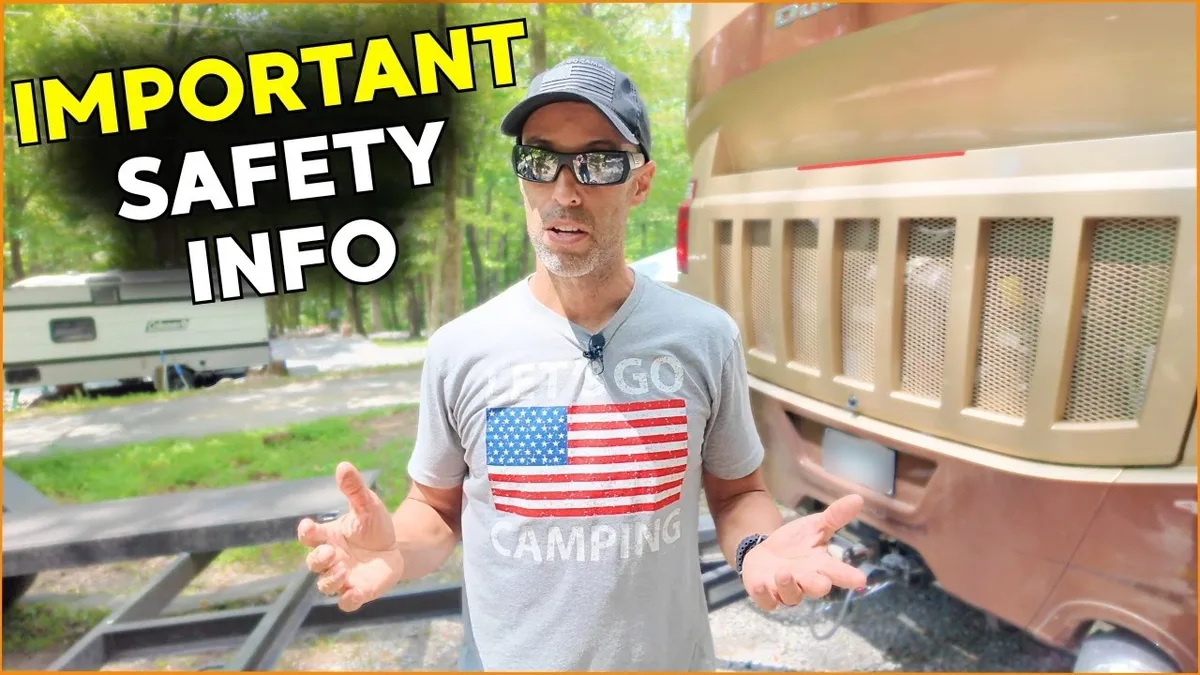
Image source: YouTube / Endless RVing
Here’s a problem that surprises a lot of renters. Most states require a trailer brake controller on any vehicle towing a trailer over 3,000 pounds. And the vast majority of rental pickup trucks do not come with one.
A brake controller is the device that lets you apply the trailer’s brakes proportionally when you hit your truck’s brakes. Without it, your trailer’s brakes either don’t work or they lock up too hard. Both are dangerous.
Rental trucks from Enterprise, Hertz, and Budget almost never have a factory-integrated brake controller. Penske’s heavy-duty trucks sometimes have them. U-Haul pickup trucks do not have them for personal trailers.
Turo owners vary widely, so you have to ask.
If the truck lacks a brake controller, you have two options. One is a wireless brake controller that clips onto your dashboard and pairs with a module you install on the trailer. The other is a portable time-delay controller that plugs into the trailer wiring pigtail.
Neither is ideal, but both are legal and functional for a rental situation.
Plan on spending $150 to $250 for a decent wireless unit. You can buy one, use it for your rental trip, and keep it for future towing needs. That’s a lot cheaper than a ticket for an unsafe towing setup or worse.
Insurance and Liability — The Fine Print That Bites
Your personal auto insurance policy almost certainly does not cover towing a trailer with a rental truck. That’s a gap most people discover only after something goes wrong.
Here’s how it typically works. Your personal policy covers liability and collision on vehicles you own. When you rent a truck, your policy may extend as a secondary coverage, but the towing exclusion is common.
Many policies specifically exclude “any vehicle used to tow a trailer while rented.”
The rental company’s insurance options also have gaps. The supplemental liability protection they sell usually covers damage to third parties. But damage to the rental truck itself?
That falls under collision damage waiver, which often excludes damage caused by towing. Read the fine print carefully.
Your credit card rental insurance can also be tricky. Premium cards like Chase Sapphire or American Platinum offer primary rental coverage, but check the terms. Many explicitly exclude towing or require the rental to be for personal use only.
The safest approach is to call your insurance agent before you rent. Ask specifically: “Does my policy cover liability and collision damage while towing a camper with a rental pickup?” Get the answer in writing if possible.
If you rent through Turo, the platform’s protection plans have their own exclusions. The standard plan covers damage to the vehicle, but towing misuse can void that coverage if the owner’s listing prohibits towing. Always read the listing rules and message the owner for confirmation.
A Safer Alternative: Renting a Heavy-Duty Truck
If your camper weighs more than 7,000 pounds loaded, you should skip half-ton trucks entirely and go straight to a heavy-duty rental. The margin for error gets too thin with a half-ton.
Heavy-duty trucks like the Ford F-250 and F-350 have significantly higher payload capacities. An F-250 diesel typically carries 3,000 to 3,500 pounds of payload. That leaves plenty of room for tongue weight, passengers, and gear.
The chassis is stiffer, the brakes are larger, and the transmission cooler is more robust.
Penske is your best bet here. They rent Ford F-250 and F-350 trucks with factory tow packages. Some locations even have diesel models, which give you better fuel economy under load and more torque for mountain passes.
Turo also has heavy-duty options, though they’re less common. Owners who list a 3/4-ton or 1-ton truck are usually aware of its towing capabilities and are more likely to allow it.
The downsides are cost and availability. Heavy-duty rentals cost more per day, typically $100 to $200. They’re also harder to find on short notice, especially diesel models.
But compared to the cost of damaging a half-ton truck or having a tow failure, the extra money is worth it.
One more thing. If you need to tow a fifth-wheel camper, you need a heavy-duty truck with a bed that can accommodate a fifth-wheel hitch. That’s rare in rental fleets.
You’ll almost certainly need a Turo rental with the hitch already installed.
Step-by-Step: How to Rent a Truck for Towing the Right Way
Follow this process to avoid surprises and stay safe.
Step 1: Weigh your camper. Take it to a CAT scale with everything loaded for a trip. Note the total weight and the tongue weight. Do not rely on the manufacturer’s dry weight.
Step 2: Check your camper’s GVWR. Use that number, not the dry weight, for all calculations. Add 10 to 15 percent for tongue weight.
Step 3: Calculate your minimum payload. Tongue weight plus people plus gear in the truck. This number must be lower than the rental truck’s payload rating.
Step 4: Choose your rental path. Based on your numbers, decide between Penske, Turo, or another option. If you need a heavy-duty truck, start with Penske.
Step 5: Call and confirm. Ask the rental location directly: “Does this specific truck have a factory hitch receiver and a trailer brake controller?” Do not rely on website descriptions.
Step 6: Inspect at pickup. Check the hitch receiver size, the ball mount, and the wiring connector. Test the trailer lights before you leave the lot. Make sure the spare tire is present and inflated.
Step 7: Drive a short test loop. Before you hook up the camper, drive the rental truck alone for a few miles. Get a feel for its handling. Then hook up and do a slow lap around the parking lot.
Step 8: Keep your paperwork. Save the rental agreement, any notes about towing permission, and your insurance confirmation. Take photos of the truck before you drive off.
Common Mistakes That Cost People Money and Safety
We’ve seen these mistakes happen over and over in owner forums and rental reviews. Learn from them.
The most common error is assuming all pickup trucks are the same. A base model F-150 with the 2.7-liter engine tows around 7,600 pounds. The same truck with the 3.5-liter EcoBoost and max tow package tows over 13,000 pounds.
If you rent a base model and hook up a 9,000-pound camper, you’re overloading it.
The second mistake is ignoring payload. People focus on towing capacity and forget that tongue weight eats into payload fast. A camper with a 1,000-pound tongue weight plus four passengers plus luggage can easily exceed a half-ton truck’s payload.
The third mistake is not verifying the hitch equipment. Renters show up at the lot expecting a hitch receiver and find a bare bumper. Or they bring the wrong ball mount size.
Always check before pickup.
The fourth mistake is skipping the brake controller requirement. Towing without one is illegal in most states for trailers over 3,000 pounds. You could get a ticket, and you’ll definitely have less control in an emergency stop.
The fifth mistake is relying on verbal permission. If a rental agent says “yeah, towing is fine,” but it’s not in the contract, you have no protection if something goes wrong. Get it in writing.
The sixth mistake is overloading the trailer itself. People pack their camper with water, gear, and supplies and exceed the GVWR. That stresses the trailer’s tires, suspension, and frame.
Weigh your setup before you travel.
When to Just Say No and Find Another Solution
Sometimes renting a truck for towing is the wrong move. Knowing when to walk away saves you money, stress, and risk.
If your camper weighs over 10,000 pounds loaded, skip the rental idea. Finding a rental heavy-duty truck with a properly equipped hitch, brake controller, and enough payload is too unreliable. You’re better off paying a professional towing service to move your camper or hiring a hotshot hauler for long distances.
If your camper is a fifth-wheel model, the situation is even harder. Fifth-wheel hitches require mounting rails in the truck bed, and rental companies do not allow those modifications. You’d need a Turo rental where the owner has already installed the rails and hitch.
Those listings exist but they’re rare.
If you need the truck for a one-way trip where you drop it off at a different location, check the rental company’s one-way policy first. Penske allows one-way rentals with towing, but some Turo owners do not. U-Haul pickup trucks cannot be used for one-way towing of personal campers at all.
And if your camper is older or poorly maintained, think twice. A trailer with worn tires, weak brakes, or a corroded coupler is dangerous behind any truck. Renting a truck won’t fix a camper that’s unsafe to tow.
Decision Guide: Which Rental Path Fits Your Situation?
Use this quick guide based on your specific camper and trip.
| Your Situation | Best Option | Why |
|---|---|---|
| Camper under 5,000 lbs, weekend trip | Penske half-ton rental | Reliable hitch, allows towing, unlimited miles |
| Camper 5,000 to 8,000 lbs, local move | Penske F-250 or Turo heavy-duty | Payload margin, factory brake controller available |
| Camper over 8,000 lbs | Turo heavy-duty diesel or professional hauler | Need payload and torque; rental fleet options are thin |
| Fifth-wheel camper | Turo only, owner must have rails | No rental company installs fifth-wheel hitches |
| Cross-country one-way trip | Penske one-way rental with towing permission | Only option that reliably allows one-way towing |
If you’re still on the fence, think about your confidence level. First-time tower? Stick with Penske.
They have consistent policies and well-maintained trucks. Experienced tower who knows the numbers? Turo gives you more truck flexibility, but you have to vet each listing carefully.
Either way, do the math first. Weigh your camper. Check the truck specs.
Confirm the hitch and brake controller. And get everything in writing. That process takes an hour upfront and saves you from a ruined trip.
Frequently Asked Questions
Can I rent a U-Haul pickup truck to tow my personal camper?
No. U-Haul policy restricts their pickup trucks to towing only U-Haul trailers. You cannot connect your personal camper to a U-Haul pickup under any circumstances.
Does Enterprise allow towing with their pickup trucks?
Generally no. Enterprise’s standard rental agreement prohibits towing. Some franchise locations may make exceptions with manager approval, but this is rare and never guaranteed.
What size rental truck do I need for a 6,000-pound camper?
A half-ton truck with a max tow package can handle 6,000 pounds. Look for a Ford F-150 with the 3.5-liter EcoBoost or a Ram 1500 with the 5.7-liter HEMI. Confirm the payload rating handles the tongue weight plus passengers and gear.
Do rental trucks come with trailer brake controllers?
Almost never from Enterprise, Hertz, or Budget. Some Penske heavy-duty trucks have factory-integrated brake controllers. For Turo rentals, message the owner and ask specifically.
Can I install my own hitch on a rental truck?
No. Rental agreements prohibit modifications including hitch installation. You must rent a truck that already has a hitch receiver installed and rated for your camper’s tongue weight.
Is it cheaper to rent a truck or hire someone to move my camper?
For a single trip under 200 miles, renting a truck is usually cheaper. For long-distance moves or heavy campers, hiring a professional hotshot hauler often costs similar and removes all the liability and stress.