How Walter Camp Invented Modern Football
You've heard the name Walter Camp. Maybe "Father of American Football." But how did Walter Camp invent football, really? Was it a single flash of brilliance, or something messier?
The truth is more interesting than the legend.
Camp didn't wake up one morning and draw up the sport we watch today. Over nearly 50 years, he chipped away at rugby's chaotic rules, shaping a game that was strategic, watchable, and distinctly American. As of 2026, every snap from center, every first-down marker, and every quarterback huddle traces back to one man and his committee meetings.
Let's dig into how it actually happened.
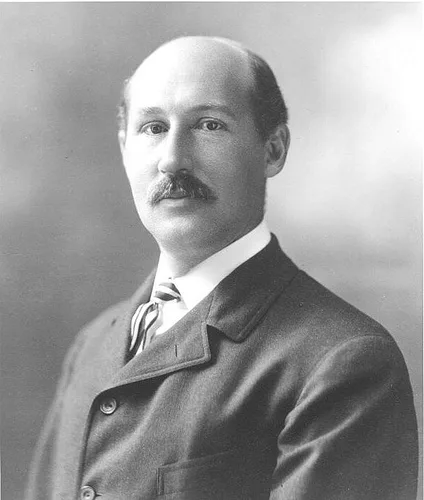
Image source: Wikimedia Commons / Unknown authorUnknown author
Quick Answer
Walter Camp invented football by systematically rewriting rugby's rules over decades. He introduced the scrimmage line in 1880. He created the down-and-distance system in 1882.
He reduced the team from 15 players to 11. He invented the quarterback position. He chaired the rules committee for almost 50 years.
His changes made the game strategic instead of a pile-up.
Why This Story Gets Told Wrong So Often
The "one genius inventor" story is tempting. It's tidy. It sells books.
But it's also almost completely wrong.
Camp was a Yale student and later a New England businessman. He didn't work alone. He was one voice on a rules committee packed with strong-willed men from Harvard, Princeton, and Columbia.
Every change he pushed through was debated, voted on, and often fought over.
The real story involves a lot of political maneuvering and compromise.
A lot of people also assume Camp invented the forward pass. He didn't. That came 20 years after his early work, and it was a safety measure, not a strategic one at first.
Camp actually opposed it for years.
Our research shows that the myth of a single inventor persists largely because Camp was such a good writer and organizer. He edited the official rulebook for three decades. He controlled the narrative.
When you write the history, you get to shape the legend.
But the legend misses something important. It hides the messy, collaborative, and often contentious process that actually created the game.
Where Football Came From Before Camp Got Involved
To understand what Camp changed, you have to understand what he started with.
Rugby's Rules Were a Mess
The 1870s version of rugby was basically controlled chaos.
Picture this: a mass of 30 players (15 per side) all trying to kick a round-ish ball forward. When a player was tackled, the ball went into a "scrum", a tight pack of players pushing against each other, trying to kick the ball back to their own side.
There was no line of scrimmage. There was no set number of downs. Play didn't stop when someone was tackled.
It just kept going, often for hours.
Games could last all afternoon with no clear winner. Scores were low, sometimes 0-0. Spectators had trouble following the action.
It was a sport built for participants, not fans.
The First "American" Games Were Basically Rugby
The first college football game in the United States was played on November 6, 1869, between Rutgers and Princeton. It looked nothing like modern football. It was closer to soccer, with a round ball and no throwing allowed.
But within a few years, the Ivy League schools switched to a rugby-based set of rules. The 1876 rules convention, which Camp attended as a Yale representative, officially adopted the rugby code.
Here's where it gets interesting. American players and coaches quickly realized rugby had problems. The scrum was dangerous and dull.
The endless play was exhausting. And American audiences wanted a faster, more understandable game.
Camp saw those problems clearly. He also saw an opportunity.
The Two Big Problems Camp Was Trying to Solve
Camp wasn't some abstract theorist. He was solving real, practical problems that made rugby a terrible spectator sport.
Danger and Pile-Ups
Rugby scrums were brutal. Fifteen players per side would lock together, heads down, pushing and shoving for possession. Injuries were common.
Broken bones, concussions, and trampled faces were part of the game.
Camp believed the scrum was the root of the problem. It was dangerous, slow, and impossible for spectators to follow. You couldn't tell who had the ball.
You couldn't see the action.
He wanted a system where the ball went to one team clearly, and the play started quickly from a fixed line.
Games That Never Ended
The other big issue was time.
In rugby, if you couldn't advance the ball, you just kept trying. There was no limit on attempts. A team could be stuck in its own half for an hour, unable to move but also not losing possession.
Spectators got bored. Players got exhausted. And athletic directors hated the unpredictability of game length.
Camp wanted a system that forced action. If you didn't move the ball forward within a certain number of tries, you lost it. This made the game faster and more exciting.
It also created clear stakes on every play.
These two problems, danger and indefinite play, were the practical challenges Camp set out to fix.
How the Scrimmage Changed Everything (1880)
This was Camp's first and most important rule change. It was adopted by the Intercollegiate Football Association in 1880.
What a Scrum Was and Why It Was Terrible
Let's be clear about what Camp replaced.
In a rugby scrum, both teams would pack together around the ball. The ball went in the middle of the pack. Players would push and try to hook the ball back to their own side with their feet.
There was no clear line. No assigned positions. Just a mass of bodies wrestling for a ball nobody could see.
The scrimmage replaced all of that.
Camp proposed that instead of a scrum, one team would get the ball. That team's center would pass the ball backward between his legs to a waiting player. The defense had to stay behind a fixed line until the ball moved.
This was revolutionary. It meant the offense controlled the ball. It meant the defense had to line up on one side.
It meant fans could see where the action was going to happen.
The scrimmage line, what we now call the line of scrimmage, was born.
The Snap and the Line of Scrimmage
The center snap was Camp's invention. Well, the earliest version of it.
In 1880, the snap was a backward pass between the center's legs. It wasn't a quick, crisp motion like today. It was slower, more deliberate.
But it established the core principle: the offense starts the play, and the defense reacts.
Per standard historical analysis, this single change transformed the game. It created a clear separation between offense and defense. It made the sport strategic.
Now teams could plan plays, practice them, and execute them from a known starting point.
The image below shows an early rugby scrum (left) compared to an American football scrimmage (right). The contrast is stark.
The scrimmage was the foundation. Everything else Camp built rested on it. But even he knew it wasn't enough on its own.
The game still needed structure. That's where the down-and-distance system came in.
The Down-and-Distance System (1882)
The scrimmage gave football a starting point. But what happened next? Without a rule forcing offense to advance, teams could just sit on the ball.
How Yard Markers Made the Game Watchable
In 1882, Camp introduced the down-and-distance system. The rule was simple: a team had three downs to gain five yards. If they failed, the other team got the ball.
This changed everything.
Now every play had stakes. If you didn't move the ball forward, you lost possession. This forced teams to be aggressive.
It created drama. And it gave spectators a clear way to follow the action.
The first down marker was a piece of rope or a flag stuck in the ground. By 1883, the field was marked with a grid of lines every five yards. This is where the term "gridiron" comes from.
The painted lines looked like a cooking grid.
Why Three Downs and Five Yards Mattered
The specific numbers weren't random.
Camp chose three downs because he thought that was a fair number of attempts. Five yards was achievable but not trivial. It created a balance between offense and defense.
Too few downs, and the game would be too defensive. Too many, and it would be boring.
The system worked. Games became faster, higher-scoring, and more interesting to watch. College football's popularity exploded in the 1880s and 1890s, largely because of this structure.
By the way, the original rule was three downs to gain five yards. It changed to four downs to gain ten yards in 1912. But the core concept, limited attempts to achieve a set distance, is pure Camp.
This system also made football uniquely American. Rugby and soccer have continuous play. Football has discrete plays, each one a miniature battle with a clear winner or loser.
That structure is Camp's most enduring legacy.
[Continue with the next section…]
The 11-Player Team
The shift from 15 players to 11 happened gradually. It wasn't a single vote. It was a series of small adjustments between 1876 and 1888.
Why 15 Players Were Too Many
Think about the field size. A rugby field is roughly the same width as a modern football field. Now cram 30 players onto it.
Space was tight. The game was clogged.
Camp believed fewer players meant more room for strategy. Fewer bodies meant more open space for running and passing. It also meant fewer injuries.
Less mass in the pile meant less weight crushing the bottom layer.
The reduction happened in stages. In 1876, teams had 15 players. In 1880, they dropped to 11 for some positions.
By 1888, 11 was the official standard across all Intercollegiate Football Association games.
What Each Lost Position Meant for the Game
The four positions that disappeared were mostly in the forward line. Rugby used eight forwards in the scrum. American football dropped that to seven, then to five, and finally settled on seven offensive linemen plus four backs.
Losing those extra bodies forced teams to spread out. The game opened up. Running backs had more room.
Passers (though rare at first) had more targets. Defenses had to cover more ground.
This change also made positions more specialized. With fewer players, each one had a defined job. The quarterback had to throw.
The fullback had to run. The ends had to catch. Modern football's position labels trace directly to this 11-player framework.
The Birth of the Quarterback Position
The quarterback is Camp's most recognizable invention. But it didn't start as the glamour position we know today.
From Scrum-Half to Signal Caller
In rugby, the scrum-half was the player who retrieved the ball from the scrum and passed it to the backs. Camp took that concept and flipped it.
In his system, the quarterback stood just behind the center. The center snapped the ball backward between his legs directly to the quarterback. The quarterback then had a split second to decide what to do with it.
At first, the quarterback was mostly a distributor. He handed the ball to a running back or threw a short pass. He rarely ran with the ball himself.
The position was more like a traffic cop than a playmaker.
But Camp saw its potential. He made the quarterback the on-field leader. The quarterback called the signals.
He adjusted plays based on what the defense showed. He was the coach's eyes on the field.
How Camp's QB Role Still Exists Today
If you watch a modern NFL game, you see Camp's quarterback in every snap. The center snaps the ball. The quarterback takes it.
The defense lines up across a fixed line. Play starts from a known spot.
The fundamentals haven't changed in 140 years.
What has changed is the complexity. Modern quarterbacks read defenses, audible at the line, and throw 60-yard bombs. But the core structure is Camp's.
The snap, the huddle, the signal calling. All of it traces back to his 1880 rulebook.
It's worth noting that Camp didn't imagine quarterbacks throwing deep passes. The forward pass wasn't legal until 1906. But he created the space for it.
The quarterback position was designed to be the control center of the offense. Everything else came later.
What Camp Did NOT Invent
This section matters because so many people get it wrong. Camp was brilliant. He was also one man.
He didn't do everything.
The Forward Pass Myth
This is the biggest misconception. Camp did not invent the forward pass. He actually resisted it for years.
The forward pass was legalized in 1906, after Camp had been on the rules committee for 28 years. It was a direct response to the injury crisis of 1905 (more on that in a moment). Camp was skeptical.
He thought it would ruin the game's physical nature.
He was wrong. The forward pass saved football. But it wasn't his idea.
The Football Itself
Camp didn't design the football. The ball evolved from a round soccer ball to an oval rugby ball to the aerodynamic shape we know today. Camp used whatever ball was standard at the time.
The modern football's pointed ends and laces came from experiments in the 1920s and 1930s. That was long after Camp's early rule changes. He gets credit for the game's structure.
Not the equipment.
The NFL, Helmets, and Modern Rules
Camp died in 1925. The NFL was founded in 1920 but didn't resemble the modern league until decades later. Helmets became mandatory in the 1930s.
The two-platoon system (separate offense and defense) came in the 1950s.
None of that was Camp's work. His influence ended with the rules committee. The professional game grew from his foundation, but he wasn't building it.
Common Mistakes People Make About Camp
Let's clear up a few persistent errors. These show up in articles, documentaries, and even history books.
Believing He Worked Alone
Camp was not a lone genius. He was a committee chairman. Every rule change had to pass a vote.
Harvard and Princeton representatives often opposed his ideas.
The down-and-distance system barely passed in 1882. Several schools threatened to leave the association. Camp had to negotiate, compromise, and sometimes wait years for his changes to stick.
Thinking the Rules Were Instant
Camp's innovations took time. The scrimmage was introduced in 1880 but wasn't universally adopted for years. Some schools ignored it.
Others modified it. The 11-player team took over a decade to become standard.
The rulebook was a living document. Camp edited it every year. He added, removed, and tweaked rules based on feedback from coaches and players.
Forgetting the Ivy League Politics
The Intercollegiate Football Association was a political battlefield. Yale, Harvard, and Princeton each wanted rules that favored their style of play. Camp had to balance competing interests.
Sometimes he lost. The forward pass was forced through over his objections. The scoring system was changed multiple times.
Camp didn't get everything he wanted. He got enough.
| Common Myth | What Actually Happened |
|---|---|
| Camp invented the forward pass | It was legalized in 1906 over his objections |
| He wrote the rules alone | He chaired a committee with Harvard and Princeton reps |
| All his changes were instantly accepted | Many took years and multiple votes |
| He designed the football | The ball evolved separately |
| He created the NFL | The NFL formed after his death |
Why Teddy Roosevelt Had to Step In (1905)
This is where Camp's system hit its biggest crisis. And it almost killed the sport.
The Injury Crisis Camp's Rules Didn't Fix
By 1905, American football was brutal. The scrimmage had reduced some dangers, but the game was still violent. Mass formations like the flying wedge caused catastrophic injuries.
The numbers were staggering. In 1905 alone, 18 players died from football-related injuries. Over 100 were seriously hurt.
Broken necks, crushed skulls, and internal bleeding were common.
The public was horrified. Newspapers called for football to be banned. Several colleges, including Columbia and Stanford, dropped the sport entirely.
Camp defended the game. He argued the injuries were isolated incidents. But the numbers proved otherwise.
President Theodore Roosevelt stepped in. He was a football fan. He was also worried about the sport's reputation.
In October 1905, he summoned representatives from Yale, Harvard, and Princeton to the White House.
Roosevelt demanded reforms. If the colleges wouldn't fix football, the government would. The pressure was intense.
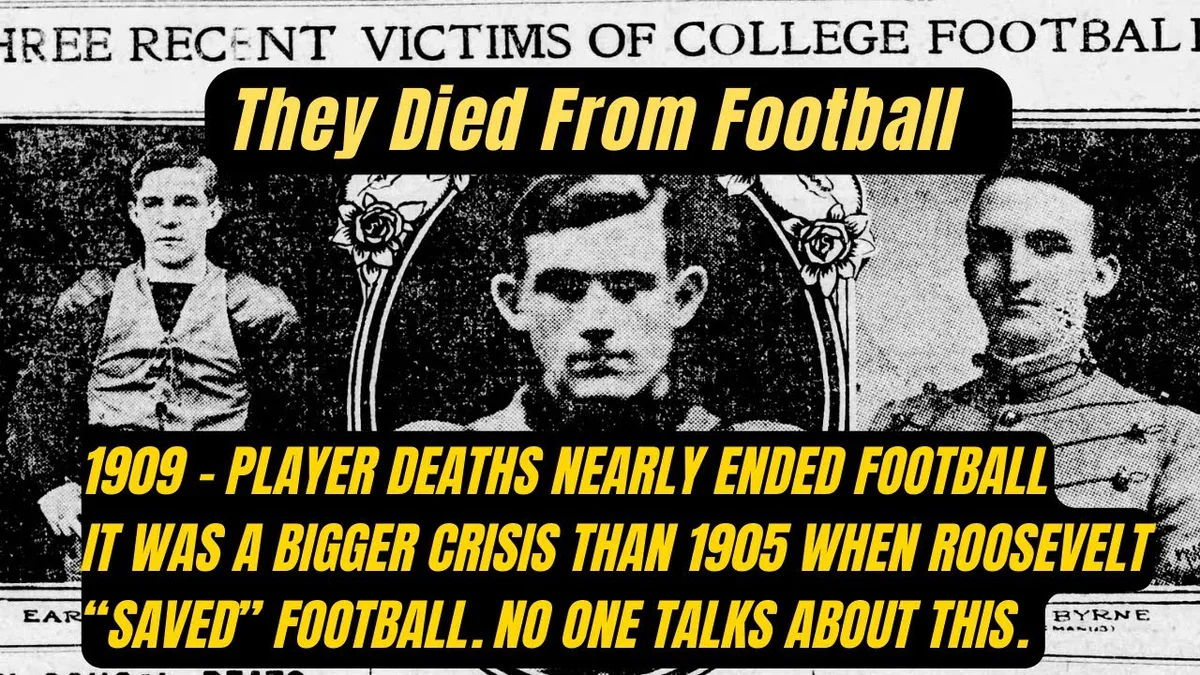
The photo below shows the kind of mass play that caused so many injuries.
The result was the creation of the Intercollegiate Athletic Association in 1906. It later became the NCAA. And the new rules included something Camp had resisted for years.
The forward pass.
It was legalized in 1906 to open up the game and reduce dangerous pile-ups. Camp was skeptical. He thought passing would make the game less manly.
He was wrong. The forward pass made football faster, safer, and far more popular.
Camp's rules were the foundation. But it took a president's intervention to save the sport from itself.
Timeline of Camp's Key Contributions
Let's lay out the major milestones. These are the moments that matter most.
1876 to 1925 at a Glance
- 1876, Camp attends the first Intercollegiate Football Association meeting at Yale. The group adopts rugby rules.
- 1878, Camp is elected secretary of the IFA rules committee. He holds this role for decades.
- 1880, The scrimmage is introduced. The center snap replaces the rugby scrum.
- 1882, The down-and-distance system is adopted. Three downs to gain five yards.
- 1883, Field markings are standardized. The gridiron pattern appears.
- 1888, The team is officially set at 11 players.
- 1890s, Camp edits the annual rulebook. His influence grows nationwide.
- 1905, The injury crisis peaks. Roosevelt intervenes.
- 1906, The forward pass is legalized. Camp opposes it but loses the vote.
- 1925, Camp dies at age 66. His final rulebook is published posthumously.
This timeline shows a career of steady, incremental change. Not a single lightning bolt. Just years of patient work.
Frequently Asked Questions
Did Walter Camp Play Football Himself?
Yes. He played for Yale from 1876 to 1881. He was a halfback and served as team captain.
His playing experience shaped his rule changes. He knew what worked on the field and what didn't.
How Is Camp Different From the Other "Fathers" of Football?
A few other names get thrown around. Princeton's Woodrow Wilson (yes, that one) wrote about football strategy. Harvard's team helped push rule changes.
But Camp is the only one who served on the rules committee for nearly 50 years. He was the consistent presence. The others came and went.
Would Camp Recognize Modern Football?
Some parts yes. The line of scrimmage. The snap.
The down markers. The quarterback. But the forward pass, the two-platoon system, the helmets, and the massive stadiums would all be foreign to him.
He might not like it. But he'd recognize the bones.
Did Camp Make Money From Football?
No. Camp was a businessman. He worked for the New Haven Clock Company his entire adult life.
He served on the rules committee without pay. He did it for the love of the game. Not for a paycheck.
Why Does Camp Get All the Credit?
Because he wrote the rulebook. For 30 years, Camp was the editor and primary author of the official rules. He controlled the narrative.
He also outlived most of his rivals. By the time he died, the story of football's creation was largely his version.