How to Sell a Used Camper Fast and for More Money
How to Sell a Used Camper Fast and for More Money
You bought a camper for weekend trips and cross-country hauls. Now it's sitting in the driveway or a storage lot, and you're ready to move on. Figuring out how to sell a used camper without leaving money on the table is the real challenge.
The wrong approach costs you time, cash, or both.
Per aggregate sales data from 2025, private party sales typically return 15 to 30 percent more than dealer trade-ins. But that extra cash comes with work: cleaning, listing, showing, and handling paperwork. The right path depends on your camper's condition, your timeline, and your tolerance for dealing with strangers.
Let's walk through the options so you can pick the one that fits.
Quick Answer
Sell it privately for the most money. Trade it in for the easiest sale. Consignment sits in the middle.
Your choice depends on condition, time, and effort. Price it using NADA or local comps.
Should You Sell It Yourself or Trade It In?
This is the first fork in the road. The answer depends on how much your time is worth and how fast you need the cash.
If you want top dollar, private sale wins every time. You cut out the middleman. The buyer pays you directly, and you keep the full retail price.
But you also do all the work: cleaning, photographing, listing, answering messages, showing the camper, negotiating, and transferring the title.
If you want to walk away in one afternoon, trade it in. You drive to a dealer, they make an offer, and you apply that amount toward a new rig or just take the check. No ads.
No strangers. No test drives. The trade-off is a lower price.
Dealers need to mark it up to cover their lot space, reconditioning, and profit margin.
Here's a quick comparison:
Factor Private Sale Trade-In
Return 15-30% higher Lower upfront offer
Time 2-8 weeks average 1-2 hours
Effort High (listing, showing, paperwork) Minimal
Risk Tire-kickers, scams, no-shows Low
Best for Sellers who can wait Sellers who need speed
If your camper is in good shape and you have a month or two, go private. If it needs work or you're already at a dealership buying something else, trade it in and move on.
There's a middle option too. Consignment lots sell your camper for you. They handle the listing, showings, and paperwork.
You pay a commission, usually 10 to 15 percent. It's a decent choice if you don't want to deal with strangers but still want more than a trade-in offer. Just vet the lot first.
Some are better than others.
Before You List: What's Your Camper Actually Worth?
Pricing is where most people mess up. Price too high and your listing sits for months. Price too low and you leave hundreds or thousands on the table.
Start with NADA Guides. It's the same book dealers use. NADA gives you a wholesale value, a retail value, and a loan value.
Your camper is worth somewhere between wholesale and retail, depending on condition and features.
Next, check live listings on RVTrader and Facebook Marketplace. Look for campers that are the same year, make, model, and floorplan. Ignore the ones that have been listed for six months.
Focus on the ones that sold recently or are priced to move.
A few things that affect value:
Slide-outs. Campers with slides sell for more and sell faster. A non-slide model is harder to move.
Floorplan. Bunkhouses and toy haulers hold value best. Rear living floorplans are popular too. Weird layouts sit.
Tire age. Tires older than five years are a red flag. Buyers factor in the cost of replacement.
roof condition. A soft spot or a leak kills the price fast. More on that in a minute.
Appliance age. A working AC and fridge matter. A non-working furnace or water heater is a negotiation point.
As of 2026, the average used travel trailer sells for about 40 to 60 percent of its original MSRP after three to five years. Pop-ups and small campers depreciate slower. Large fifth wheels and motorhomes drop faster.
If you're unsure, set your price at the higher end of the fair range and plan to negotiate. Most buyers expect to haggle. Leave yourself 5 to 10 percent of wiggle room.
Your Camper's Condition: Are You Selling 'As-Is' or Fixing It First?
This is the second big decision point. Every dollar you spend on repairs needs to come back in the sale price. Some fixes are worth it.
Others are not.
Fix these first:
Clean it thoroughly. A dirty camper screams neglect. Spend a weekend deep cleaning. Wash the exterior. Scrub the interior. Degrease the kitchen. Clean the bathroom. It costs you time and a few dollars in supplies. It can add hundreds to your final price.
Replace broken light bulbs and fixtures. Cheap and easy. Buyers notice.
Fix leaks you can see. That water stain on the ceiling? Fix the roof seal, dry the area, and paint over it. If you leave it, buyers will assume the worst.
Service the AC and fridge. A working AC is a deal-closer in summer. A fridge that doesn't get cold is a deal-breaker.
Replace the battery if it's dead. A cheap lead-acid battery costs $100. It makes the camper feel ready to use.
Skip these unless you have time to burn:
Engine or transmission work on a motorhome. If the drivetrain has issues, sell it as-is to a mechanic or a wholesaler. Major repairs rarely pay off.
New upholstery or curtains. Cosmetic upgrades are personal. Let the buyer choose their own style.
Full repaint. Unless the exterior is peeling badly, a wash and wax is enough.
The if-then logic here is simple:
If the camper needs less than $500 in obvious repairs, fix them and price for retail.
If it needs $1,000 to $2,000 in repairs, fix the cheap stuff and sell as-is for the rest. Disclose everything honestly.
If it needs major structural or mechanical work, sell it as-is at a wholesale price. You'll save yourself the headache.
Buyers respect honesty. Disclose known issues in your listing. A buyer who finds hidden damage will walk or demand a huge discount.
One who knows what they're getting is more likely to close the deal.
Where to List It: Platforms, Consignment, and Local Options
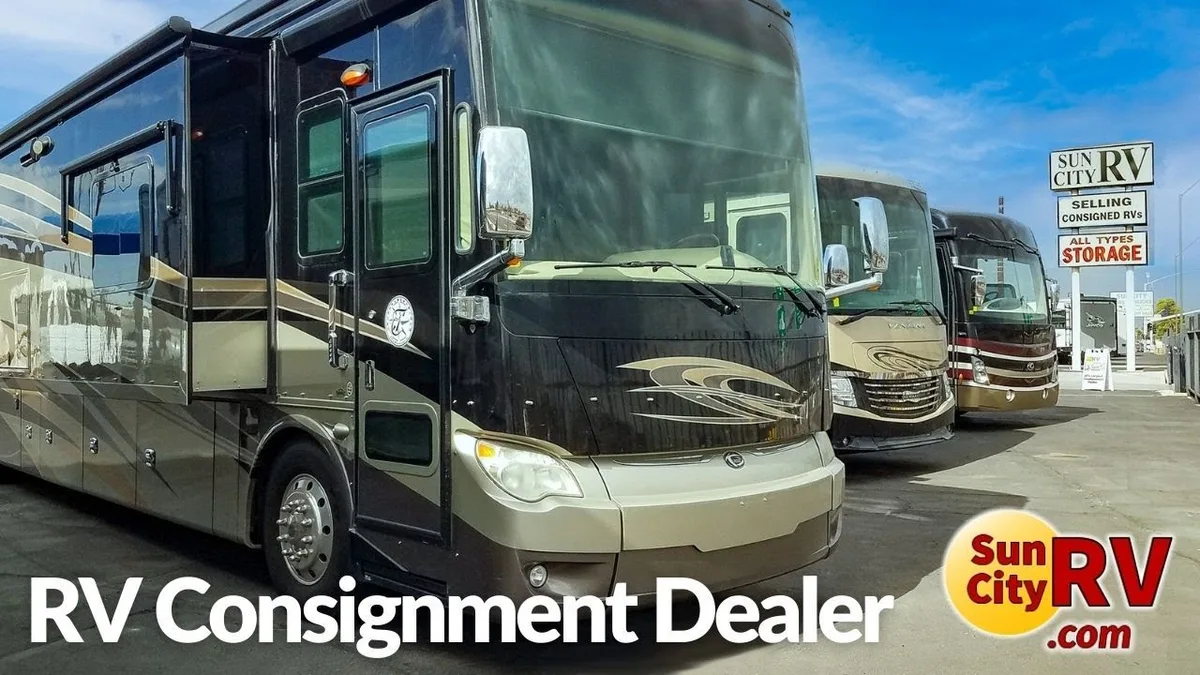
Image source: YouTube / Sun City RV (YouTube thumbnail (fair-use with source credit))
Your listing platform determines who sees your camper and how fast it sells. Here's how the main options stack up.
Facebook Marketplace is the biggest pool of buyers. It's free. You can list in local groups and RV-specific groups.
The downsides are tire-kickers, lowball offers, and the occasional scam. But for a mid-range camper under $20,000, it's the best place to start.
RVTrader is the dedicated RV listing site. It costs money, usually $50 to $100 for a listing that runs until the camper sells. The audience is more serious.
Buyers on RVTrader are actively searching for a specific make and model. If you have a rare or desirable camper, this is worth the fee.
Craigslist still works for campers in the $5,000 to $15,000 range. The audience is smaller than Facebook, but the buyers tend to be more serious. Just watch out for scams.
Cash only. In person only.
Consignment lots are a good middle ground. You drop off the camper, they handle the rest. Typical commission is 10 to 15 percent.
Some lots also charge a small storage fee if it doesn't sell quickly. Ask about their track record and how many campers they move per month.
Dealer trade-in is the fastest option. You lose on price but gain speed and convenience. If you're buying a new camper anyway, trade-in also saves you sales tax in some states.
The trade-in value reduces the taxable amount on your new purchase.
Facebook groups for specific brands or models work well. If you own a vintage Airstream or a specific brand like Lance, find the owner's group. Post your listing there.
Enthusiasts pay more and move faster.
Your best bet depends on your camper:
Under $10,000: Facebook Marketplace and Craigslist.
$10,000 to $30,000: Facebook Marketplace plus RVTrader.
Over $30,000: RVTrader plus consignment or dealer trade-in.
If you want to rent it out instead of selling right away, that's also an option. Some owners list on rental platforms to cover storage costs while they wait for the right buyer. Just make sure your insurance covers rentals.
Renters can be rough on campers, so weigh that risk carefully.
Photos, Descriptions, and Paperwork That Actually Sell
Your listing is the first impression. Bad photos and sloppy descriptions make buyers scroll past. Good ones get you calls and offers.
Photos matter more than anything. Take them in daylight. Open all blinds and curtains. Shoot wide shots of each room from the doorway.
Include close-ups of the kitchen counter, the bathroom sink, and the bed. Show the exterior from all four corners. Take a shot of the tires showing the date code.
If there's damage, photograph it honestly. Buyers trust sellers who show everything.
Aim for 15 to 25 photos. That's the sweet spot. Too few looks sketchy.
Too many overwhelms.
The description should answer the questions buyers actually ask. Start with the year, make, model, and floorplan name. Then list:
Length and GVWR
Number of slide-outs
Sleeping capacity
Key upgrades (solar panels, lithium batteries, new tires, upgraded AC)
Known issues (be honest)
Reason for selling (optional but helpful)
Keep it factual. Skip the sales pitch. Buyers can smell fluff.
Paperwork you need ready:
Title. You need a clean title in your name. If there's a lien, you'll need to pay it off and get a lien release before selling.
Bill of sale. A simple document with buyer and seller names, date, sale price, VIN, and a signature. Some states require notarization.
Service records. Receipts for repairs, tire replacements, and routine maintenance build trust.
Owner's manuals. Original manuals for appliances and the camper itself add perceived value.
If you're missing the title, stop here. You can't sell a camper without a clean title in most states. We'll cover that in a minute.
Real Numbers: Pricing, Fees, and Timing
Let's talk actual dollars and timelines so you know what to expect.
Depreciation curve. New campers lose 20 to 30 percent of their value in the first three years. After that, the curve flattens. A five-year-old camper in good condition is worth roughly 50 to 60 percent of its original MSRP.
A ten-year-old camper is worth 30 to 40 percent, condition dependent.
Days on market. The average private sale takes 30 to 60 days. If you're priced correctly, you'll get serious interest in the first two weeks. If you get no calls after 10 days, your price is too high.
Price drop strategy. If your camper hasn't sold after 30 days, drop the price by 5 to 10 percent. A second drop after 45 days if needed. Campers that sit for 90 days get stigmatized.
Fees to factor in:
Cost Amount
RVTrader listing fee $50-$100
Consignment commission 10-15% of sale price
Detailing supplies $30-$80
Tire replacement (if needed) $600-$1,200
Roof reseal (DIY) $100-$300
Title transfer fee $10-$50 (varies by state)
Seasonal timing matters. Sell in spring or early summer for the best price. April through June is peak season. Buyers are motivated.
Listings move fast. Fall and winter are slower. You can still sell, but expect to discount 10 to 20 percent compared to spring.
If you're in a snowbird state like Arizona or Florida, the market is more year-round. Northern states see a hard drop-off after Labor Day.
The 7 Most Common Mistakes (and How to Avoid Them)
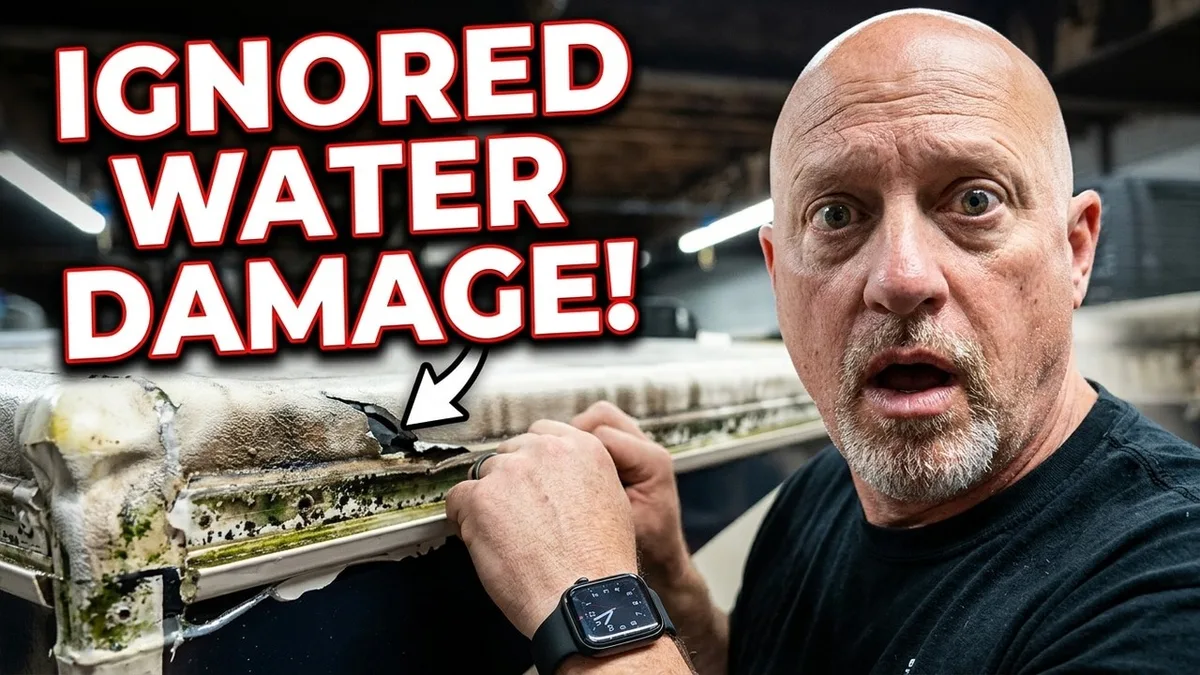
Image source: YouTube / Your RV Specialists (YouTube thumbnail (fair-use with source credit))
These mistakes cost sellers time and money. Avoid them.
- Pricing too high from the start. Your first two weeks are the best window. If you overprice, you miss that window.
Price realistically based on comps, not your emotional attachment.
- Hiding water damage. Buyers check for soft spots in the roof, floor, and walls. If they find unreported damage, they walk.
Or they demand a huge discount. Disclose it upfront and adjust your price accordingly.
- Skipping the deep clean. A dirty camper tells buyers you didn't maintain it. Even if it's mechanically perfect, grime kills the sale.
Spend the afternoon cleaning.
Taking bad photos. Dark, cluttered, or blurry photos make your listing look like a scam. Retake them if they're not clear.
Forgetting the tire date code. Tires over five years old look like a $1,000 expense to a buyer. Check the DOT code.
If they're old, either replace them or discount the price.
Not having the title ready. You can't sell what you can't legally transfer. If you've lost the title, start the replacement process with your DMV before you list.
Ignoring the smell. Musty odors from mold or mildew are a deal-breaker. Deep clean the upholstery, replace the cabin air filters, and air it out for a few days before showings.
A quick note on safety: when you show the camper, meet during daylight. Bring a friend. Don't let strangers test-drive a motorhome without you present.
Keep the transaction cash or certified check.
Selling Without a Title? Legal Red Flags to Watch For
This is the most common legal headache. If you don't have a clean title in your name, you can't legally sell the camper to a private buyer.
If you lost the title: Go to your local DMV or Secretary of State office. You'll fill out a duplicate title application. Fees vary by state but are usually $10 to $30.
You'll get a new title in the mail in one to three weeks.
If there's a lien on the camper: You need to pay off the loan first. The lender sends you a lien release. Some states let you do the sale at the bank with the buyer.
The lender handles the paperwork. Call your bank and ask about their process.
If you inherited the camper: You need proof of ownership. Usually a will, probate documents, or an affidavit of heirship. Rules vary by state.
Check with your DMV before listing.
If you bought the camper without a title: This is a legal gray area. Some states allow a bonded title process. It's complicated.
In most cases, you can't sell it until you get the title sorted.
Title fraud warning: Never accept a payment plan from a buyer. You hand over the title, they stop paying. Cash, cashier's check, or bank wire only.
Meet at the buyer's bank if you're unsure.
Final Decision Guide: Which Path Fits You Best?
Here's the decision tree. Follow the branch that matches your situation.
Branch 1: I need the most money and have time.
Sell privately on Facebook Marketplace and RVTrader.
Deep clean, fix cheap issues, take good photos.
Price at the high end of comps with 10 percent negotiation room.
Expect 30 to 60 days.
Branch 2: I need it gone this week.
Trade it in at a dealer. Accept the lower offer.
Call three dealers for quotes. Some will buy it even if you're not buying from them.
Sell it to a wholesaler or "we buy any RV" service.
Expect 60 to 70 percent of retail value.
Branch 3: I don't want to deal with strangers but want more than trade-in.
Use a consignment lot.
Visit the lot first. Look at their inventory. Ask how many campers they sell per month.
Expect 10 to 15 percent commission.
Branch 4: My camper needs major repairs.
Sell it as-is. Disclose everything.
List on Facebook Marketplace with a realistic price.
Expect wholesalers and flippers to contact you. Lowball offers are normal.
Branch 5: I'm buying a new camper.
Trade in your old one. The sales tax savings on the new purchase can offset the lower trade-in offer.
Ask the dealer for a written trade-in value before you negotiate on the new camper. Keep the two numbers separate.
Selling a camper is a straightforward process once you know the branches. Pick the one that fits your situation. Price it honestly.
Clean it well. Take good photos. Disclose issues.
The right buyer will find you.
Frequently Asked Questions
How long does it take to sell a used camper privately?
Most private sales take 30 to 60 days. Campers priced correctly and listed in spring sell faster. If you haven't had serious interest in two weeks, your price is too high.
What's the best time of year to sell a camper?
April through June is peak season. Buyers are motivated and prices are highest. Fall and winter sales are slower.
Expect to discount 10 to 20 percent off spring prices.
Do I need to pay taxes when I sell my camper?
In most states, you don't pay sales tax on a private sale. The buyer pays the tax when they register it. Some states require you to report the sale.
Check your state DMV rules.
Can I sell my camper if I still owe money on it?
Yes, but you need to pay off the loan first. The lender sends a lien release. Some lenders let you complete the sale at their branch.
Call your bank before listing.
Should I fix the camper before selling it?
Fix cheap, obvious issues like broken lights, leaks, and dead batteries. Skip major repairs like engine work or new upholstery. Clean it thoroughly.
That alone can add hundreds to the sale price.
What paperwork do I need to sell a camper?
You need the title, a bill of sale, and any service records. If you have owner's manuals, include them. Some states require notarized bills of sale.
Check your local DMV requirements.