Training Camp Length: How Long Does It Last?
You think training camp is the same for everyone, but that assumption can cost you a roster spot, a scholarship, or even your health. The question “how long does training camp last” has a different answer depending on whether you’re an NFL rookie, a college walk-on, a military recruit, or a parent dropping your kid off for a week of drills.
As of 2026, the range runs from a few days for youth camps all the way up to 13 weeks for Marine Corps basic training. The real answer depends on who you are and what you’re trying to accomplish. We’ve broken down the exact timelines by league, branch, and level so you know what to expect before you pack your bags.
Quick Answer
NFL training camp lasts about six weeks from late July to late August. NBA camp runs three to four weeks in September and October. NHL camp is roughly three weeks.
MLB Spring Training stretches six weeks starting in mid-February. College fall camp is three to four weeks before the first game. Military basic training ranges from eight to 13 weeks depending on the branch.
Youth and high school camps vary from a weekend to two weeks.
Why This Answer Actually Matters (And Why Generic Timelines Can Cost You)
A vague answer isn’t just unhelpful. It can be dangerous.
When a college freshman shows up to fall camp expecting a light two-week ramp-up and gets hit with three weeks of two-a-days in August heat, that mismatch causes injuries. When an undrafted free agent misreads the reporting date for mandatory minicamp and shows up a day late, that player gets cut before taking a single snap. When a parent books a family vacation overlapping with their kid’s high school football camp, that kid misses the conditioning test and sits out the first game.
Training camp isn’t just a date on a calendar. It’s a process with phases, rules, and consequences.
The NFL Collective Bargaining Agreement spells out exactly how many days of padded practice are allowed. The NCAA has strict limits on contact days during preseason. State high school athletic associations mandate a five- to seven-day acclimatization period before players can put on full pads.
Each of these frameworks changes the total duration and what happens during each week.
Generic online answers lump everything together. They say “a few weeks” or “about a month” and leave you guessing. That’s not good enough when your roster spot or your child’s safety is on the line.

NFL Training Camp: The Gold Standard (6 Weeks, But It’s Complicated)
The NFL training camp schedule is the most documented and most imitated in professional sports. It runs roughly six weeks, starting in late July and ending in late August. But that six-week window contains several distinct phases that every player needs to understand.
The Five Phases of NFL Camp
Reporting Day and Physicals. Players report to the facility, get weighed in, undergo physical examinations, and take baseline concussion tests. This is also when the dreaded conditioning test happens. Fail it and you’re on the sideline until you pass.
Acclimation Period (Days 1-3). The first three days are helmets only. No pads. No contact.
Players get reacquainted with the playbook and the team’s conditioning standards. The NFLPA negotiated this window specifically to reduce soft-tissue injuries.
Padded Practices Begin (Days 4-7). The pads come on but contact is limited. Teams run walk-throughs, install packages, and start evaluating depth chart positioning. This is where “camp bodies” get separated from real roster contenders.
Full Contact Period (Weeks 2-4). This is the grind. Two-a-days are officially banned under the current CBA, but teams still hold long, high-intensity practices with full pads. Joint practices with other teams add an extra layer of competition.
Preseason games start during this window, typically three per team since the 2021 season.
Preseason Games and Ramp-Down (Weeks 5-6). Practice intensity drops. Starters play less in the third preseason game. The final roster cutdown from 90 to 53 players happens after the last preseason game.
For players on the bubble, these last two weeks are a daily job interview.

Rookie Minicamp vs. Mandatory Minicamp vs. Full Camp
This is where confusion costs players.
Rookie minicamp happens in May, right after the draft. It lasts two to three days. Only rookies, undrafted free agents, and a handful of tryout players attend.
It’s not training camp. It’s a preview.
Mandatory minicamp happens in June. It’s three days of practices that every veteran must attend. The NFL CBA classifies it as mandatory with fines for missing it.
Some players skip it anyway and pay the penalty. But “voluntary” OTAs in May and June are a different thing. No fines for missing those, but coaches notice.
Full training camp in July and August is the real deal. Missing it without a valid reason, especially for a young player, is essentially quitting the team.
Why “Voluntary” Isn’t Really Optional
The NFL uses the word “voluntary” loosely. Officially, OTAs are voluntary. Unofficially, players who skip them lose reps and lose trust.
For a veteran with a guaranteed contract, skipping OTAs is a negotiation tactic. For a rookie or a bubble player, it’s a career mistake.
The CBA gives players the right to skip these workouts, but head coaches control playing time. The practical reality is that most players attend everything from May through August. The six-week training camp window is just the most intense part of an already long offseason program.
College Football Fall Camp: Shorter Window, Higher Intensity
College fall camp is a different animal. It’s shorter than the NFL version but physically harder per day. The NCAA restricts the preseason to a maximum of 25 days before the first regular season game.
Most programs schedule three to four weeks of camp beginning in early August.
NCAA Rules That Dictate the Schedule
The NCAA Division I Manual lays out strict rules for preseason practice. Players can only participate in one practice per day during the first five days of camp. After that, teams can hold two practices in a single day but cannot exceed four hours of on-field activity total.
Contact practices are limited to no more than three per week during the preseason. No full-contact drills are allowed during the first three days. These rules exist because college athletes are younger, less conditioned, and more prone to heat-related injuries than their NFL counterparts.
The actual camp length varies by school and conference. Some Power Five programs push the full 25 days. Smaller programs might run three weeks to align with academic calendars.
The key difference from the NFL is that college camp ends when classes start, not when preseason games finish.
The Conditioning Test: Your First Real Hurdle
Every college program has a conditioning test on day one. It’s usually a series of 100-yard or 110-yard sprints with strict time limits. The distance and required times vary by position.
Offensive linemen get slightly more generous times than defensive backs.
Players who fail the conditioning test sit out practice until they pass. In some programs, failing means running after practice every day until the coaches are satisfied. In extreme cases, players who fail multiple times get sent home before camp even starts.
This is why showing up in shape matters more than anything else. A player who arrives at camp ten pounds over their playing weight is fighting an uphill battle from day one. The conditioning test doesn’t care about your high school highlights.
NBA, NHL & MLB: How Other Pro Leagues Compare
Not all training camps are built the same. Each major league has its own schedule, its own CBA rules, and its own culture around camp duration.
NBA: 3-4 Weeks of Controlled Contact
NBA training camp runs from late September to mid-October. Three to four weeks total. The first few days focus on conditioning and walk-throughs.
Full scrimmages start around day five. Teams play four or five preseason games during this window.
The NBA limits contact more than the NFL does. Two-a-day practices exist but only for conditioning, not full-court scrimmages. The emphasis is on system installation and player evaluation, not physical domination.
Rookies and veterans report at the same time in the NBA. There’s no equivalent of the NFL’s rookie minicamp. The shorter camp reflects the NBA’s longer regular season and the reality that basketball players need fresher legs than football players.
NHL: 3 Weeks Before the First Exhibition Game
NHL training camp is roughly three weeks. Players report in mid-September. The first week is medicals, fitness testing, and on-ice evaluation.
Exhibition games start in week two. The roster gets cut down several times before the regular season opener in early October.
The noticeable difference in hockey is the sheer number of exhibition games. NHL teams play six to eight preseason games, almost double the NFL’s three. This is partly because hockey rosters are smaller and partly because the league needs to evaluate goaltenders more thoroughly than any other position group.
Veteran players often get a lighter load in camp. That’s written into the CBA for players over a certain age or with a minimum number of NHL games played.
MLB Spring Training: The Marathon (6 Weeks, 30+ Games)
Major League Baseball’s spring training is the longest camp in professional sports. Six weeks starting in mid-February. Pitchers and catchers report first, about a week before position players.
The total camp duration is similar to the NFL, but the volume of games is dramatically higher.
MLB teams play roughly 30 spring training games. That’s more preseason games than some NFL teams play in an entire decade. The games are low intensity by regular season standards.
Pitchers work on specific pitches. Hitters focus on timing, not results.
The length of spring training reflects baseball’s unique physical demands. Pitchers need six weeks to build arm strength safely. Position players need that many at-bats to get their timing back.
Cutting spring training shorter would increase injury rates across the league.
Military Basic Training: A Different Kind of Camp
This is where “training camp” takes on an entirely different meaning. Military basic training shares the same name as sports camps but has nothing in common with them in terms of duration, intensity, or stakes.
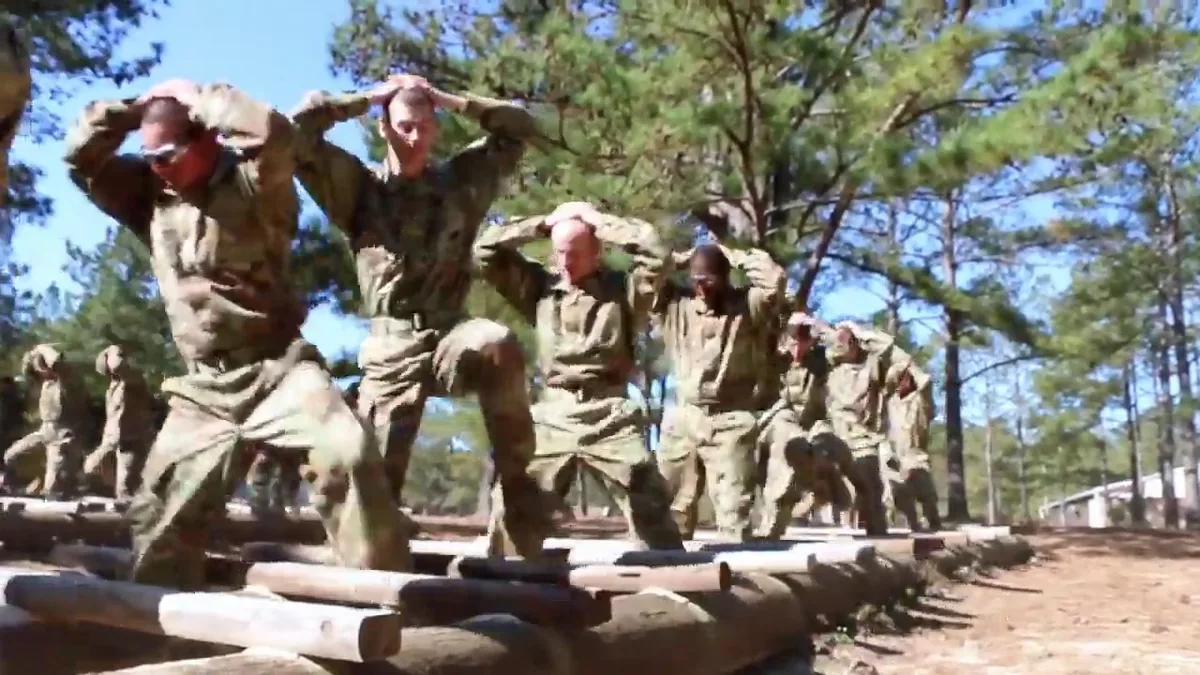
Army (10 Weeks), Marines (13), Navy (8-9), Air Force (8.5)
Each branch of the U.S. military has its own basic training timeline.
Army Basic Combat Training: 10 weeks at one of four training bases including Fort Jackson. The first week is reception and processing. Red Phase is weeks two and three.
White Phase is weeks four through six. Gold Phase is weeks seven through nine. Graduation happens at week ten.
Marine Corps Boot Camp: 13 weeks at Parris Island for male recruits east of the Mississippi and at San Diego for western recruits. Female recruits train at Parris Island exclusively. The Marine Corps runs the longest basic training in the U.S. military, reinforcing their reputation for the most demanding entry-level program.
Navy Boot Camp: 8 to 9 weeks at Recruit Training Command Great Lakes. The Navy’s program emphasizes firefighting, shipboard damage control, and basic seamanship alongside physical training.
Air Force Basic Military Training: 8.5 weeks at Lackland Air Force Base. The shortest of the main branches. The Air Force focuses more on classroom instruction and less on physical hardship than the other branches.
Why Military and Sports Camps Shouldn’t Be Confused
Some athletes use the language of sports training to describe military boot camp. That’s a mistake.
Military basic training isn’t about making a roster. It’s about transforming civilians into service members. The stakes are higher.
The consequences of failure include administrative separation, not just a trip to the waiver wire. The physical demands are different, emphasizing endurance and teamwork over position-specific skills.
Military recruits don’t get to opt out of basic training the way an NFL player skips OTAs. Missing a day means recycling to the previous week or starting over entirely. The training camp timeline in the military is non-negotiable in a way that sports camps simply aren’t.
For prospective recruits, this matters because enlistment contracts specify your basic training start date and your expected graduation date. Those dates affect college plans, job arrangements, and family obligations. Knowing the exact duration of your specific branch’s program is essential for planning your life around it.
The Risks That Make This an Expert-YMYL Topic
You wouldn’t trust a random blog to tell you how to wire your house. You shouldn’t trust one to tell you when training camp starts either. The stakes are higher than most people realize.
Heat Illness and Overuse Injuries
Heat stroke kills athletes every year. It’s not rare. The CDC tracks hundreds of heat-related deaths in sports and military training annually.
College and high school football players are at the highest risk because they train in August, the hottest month of the year.
The wrong timeline creates the wrong expectations. A player who thinks camp is three weeks might push through a minor injury instead of reporting it. That minor injury becomes a torn muscle or a stress fracture.
A coach who doesn’t understand the acclimatization requirements might push players too hard on day one, leading to heat exhaustion before the first water break.
The National Federation of State High School Associations mandates heat acclimatization policies that vary by state. Some states require a five-day ramp-up. Others require seven days.
Parents who don’t know their state’s specific timeline can’t advocate for their children effectively.
The Cost of Showing Up Out of Shape
Every camp has a fitness standard. NFL teams test with the Cooper Test or a series of 300-yard shuttles. College programs use gassers.
Military branches have the Army Physical Fitness Test or the Marine Corps Physical Fitness Test.
Failing these tests has real consequences. In the NFL, players who fail the conditioning test get placed on the non-football illness list, which doesn’t count against the roster but also doesn’t pay. In college, failing means extra conditioning sessions after practice every day.
In the military, failing means being recycled to a later training company, adding weeks to your basic training timeline.
Knowing the exact duration of your camp helps you plan your preparation. A player who knows they have six weeks of NFL camp ahead of them paces their conditioning differently than one who knows they have three weeks of college camp.
Contract and Roster Deadline Consequences
The NFL’s final cutdown date is the Tuesday after the third preseason game. Players who don’t know this date can’t prepare for it emotionally or financially. Undrafted free agents who survive until the final cut earn a practice squad spot worth $12,000 per week as of 2024.
Players who get cut earlier earn nothing.
The same logic applies to military recruits. Signing a contract with a guaranteed ship date means you have to be ready on that date. Showing up out of shape or unprepared can delay your shipping date by months.
That affects college plans, job offers, and family obligations.
For parents enrolling kids in youth camps, the cost is financial. A six-week overnight camp costs thousands of dollars. A weekend camp costs a few hundred.
Knowing the duration ahead of time prevents budget surprises.
Common Mistakes People Make With Training Camp Timelines
Assuming All Camps Are the Same Length
The biggest mistake is treating “training camp” as one thing. It’s not. An NFL training camp is six weeks of professional football with three preseason games.
A college fall camp is three to four weeks of intense but NCAA-regulated practice. A high school camp is a week of conditioning and installation. A youth camp is a weekend of drills and games.
Treating them the same leads to poor preparation. A high school senior who treats college camp like an extended version of high school camp will get overwhelmed by the physical demands. A youth football parent who expects a two-week commitment for a weekend camp will have schedule conflicts.
Misreading “Voluntary” Workouts
The word “voluntary” in sports contracts means something specific. It doesn’t mean optional in the way you might think. The NFL CBA defines voluntary workouts as practices that players cannot be fined for missing.
That’s true.
But coaches evaluate players year-round now. Missing voluntary workouts means missing reps, missing installation, and missing the chance to build chemistry. For established veterans, skipping voluntary workouts is a leverage play.
For everyone else, it’s a mistake.
The best rule of thumb is that voluntary workouts are mandatory for any player who isn’t a guaranteed starter with a fully guaranteed contract. Everyone else should plan to attend everything from May through August.
Ignoring the Roster Cutdown Schedule
The NFL roster cutdown happens in stages. Teams go from 90 players to 53 over the course of the preseason. Each cut has a specific date.
Players who don’t know those dates can’t plan their season.
College rosters aren’t capped the same way, but coaches still make cuts during fall camp. Walk-ons are especially vulnerable. Knowing when cuts happen helps players prepare mentally and have a backup plan.
Military recruits face a different version of this problem. The ship date is the ship date. Missing it means waiting for the next available slot, which could be months away.
What Happens If You Show Up Late (Or Not at All)
Sports Camps
Showing up late to an NFL training camp means fines, lost reps, and a shorter evaluation window. The CBA allows teams to fine players $40,000 per day for missing mandatory minicamp. Training camp fines are negotiated individually, but they’re significant.
For college athletes, showing up late means missing the conditioning test, falling behind in the depth chart, and losing the trust of the coaching staff. Some programs have zero-tolerance policies for late arrivals.
For youth and high school athletes, showing up late means missing critical installation periods. Coaches don’t repeat install for late arrivals. A player who misses the first two days of camp might never catch up to the playbook.
Military Basic Training
Military basic training has no tolerance for lateness. Reporting to basic training late means your slot goes to the next eligible recruit. You get a new ship date, which could be weeks or months away.
The consequences are more serious than missing sports camp. Military contracts are legal obligations. Failing to report can result in administrative separation from the delayed entry program, which can affect future job opportunities and security clearances.
Legal and Financial Implications
Professional athletes who miss training camp without a valid reason face fines, suspension, and breach of contract claims. The NFL CBA gives teams the right to recover signing bonus money from players who fail to report.
Military recruits face no financial penalties for reporting late, but they do face career consequences. The delayed entry program requires recruits to maintain their eligibility. Failing to report can result in being discharged from the program entirely.
For parents of youth athletes, the financial penalty is simpler: you lose the camp fee. Most camps have strict refund policies that don’t cover no-shows.
How to Prepare for Your Specific Camp Based on Duration
For NFL Aspirants
Start your conditioning program eight weeks before reporting day. Focus on position-specific drills and overall cardiovascular fitness. Know your team’s conditioning test standards and exceed them before you arrive.
Plan your life around a six-week window from late July through late August. Don’t book flights, vacations, or job interviews during this period. The NFL schedule changes annually, so check the official team website for exact dates.
For College Athletes
Arrive on campus two weeks before the official reporting date if the NCAA allows it. Many programs have early arrival options for scholarship players. Use that time to get settled, meet the strength staff, and start your personal conditioning.
Expect three to four weeks of camp ending when classes start. Plan your course schedule around practice times. Most athletic departments have dedicated academic advisors who handle this for you.
For Military Recruits
Prepare for eight to 13 weeks depending on your branch. Start your physical training three months before your ship date. Focus on running, push-ups, sit-ups, and pull-ups based on your branch’s fitness test requirements.
Don’t schedule anything during basic training. No appointments, no commitments, no exceptions. The military controls your schedule entirely.
Any pre-existing commitments will be broken.
For Parents of Youth Athletes
Confirm the exact start and end dates before registering. Ask about daily schedules, drop-off and pick-up times, and any required equipment. Know the camp’s refund and cancellation policy before you pay.
Understand the acclimatization requirements in your state. If your state mandates a five-day ramp-up before full pads, make sure the camp follows that timeline. Camps that don’t follow safety protocols are not worth the money.
Frequently Asked Questions
Can training camp be shorter for veteran players?
In the NFL, veterans can negotiate reduced camp participation in their contracts. Some star players report late as a leverage tactic. But in practice, most veterans attend full camp to stay sharp.
Military basic training has no veteran shortcut. Everyone goes through the same timeline regardless of prior experience.
Do you get paid during training camp?
NFL players receive their regular season salary during training camp. Rookies on rookie contracts earn about $12,000 per week during camp. Practice squad players earn a flat weekly rate.
College athletes do not get paid for fall camp. Military recruits earn basic pay starting from their ship date, roughly $1,800 per month for new recruits as of 2024.
What happens in the gap between camp and the regular season?
In the NFL, there’s a one-week gap between the final preseason game and the regular season opener. Teams use this week for game planning, not conditioning. College teams have a similar gap called “game week” before the season opener.
Military recruits graduate basic training and then move directly into advanced individual training or their first duty station.
Can I leave training camp early if I’m not making the team?
Yes. Professional players who know they won’t make the roster sometimes ask for their release during camp. Coaches prefer to know early rather than carry a player who has no path to the roster.
For college athletes, leaving early means forfeiting your scholarship if you’re on one. Military recruits cannot leave basic training early without facing serious consequences.
How do I find the exact dates for my specific training camp?
For NFL teams, check the official team website or the NFL’s training camp schedule page every July. For college programs, check the athletic department website in June. For military recruits, your recruiter provides your ship date at the time of enlistment.
For youth camps, the registration page lists exact start and end dates.
Does training camp length affect injury rates?
Yes. Research consistently shows that longer camps with proper ramp-up periods reduce injury rates. The NFL’s current six-week schedule with the three-day acclimation period produces fewer soft-tissue injuries than the old system of shorter, more intense camps.
Military basic training programs that rush through conditioning see higher attrition rates due to injury.
Youth, High School & Pop Warner: What Parents Need to Know
Youth camps are the shortest and most varied. A weekend camp runs Friday through Sunday. A week-long summer camp runs Monday through Friday.
Some elite high school showcase camps stretch to two weeks.
The key number for parents is the acclimatization period.
The Acclimatization Period (This Is Law in Most States)
The National Federation of State High School Associations requires a five to seven day ramp-up before full contact. Days one and two are helmets only. Days three and four add shoulder pads.
Full pads come on day five or later.
Some states go further. Texas mandates a seven day acclimatization period with specific practice time limits. California follows a similar model.
Parents should confirm their state’s specific timeline before enrolling their child in any camp that advertises “full contact” early in the week.
If a camp skips these phases, walk away. The heat illness statistics for young athletes are clear. The CDC reports that high school football players account for the highest rate of exertional heat illness among all youth sports.
The Risks That Make This an Expert-YMYL Topic
You wouldn’t trust a random blog for medical advice. Training camp timelines deserve the same caution. The wrong information can lead to injury, financial loss, or worse.
Heat Illness and Overuse Injuries
Heat stroke is the most immediate risk. The CDC tracks hundreds of heat related deaths in sports and military training every year. August is the deadliest month because athletes train in full pads during peak summer temperatures.
The CDC’s guidelines on heat illness prevention are clear. Athletes need five to seven days to acclimatize to heat before full contact. Ignoring this timeline isn’t just uncomfortable.
It’s dangerous.
Contract and Roster Deadline Consequences
NFL teams cut from 90 to 53 players on a fixed schedule. Missing that schedule means losing your spot. The deadline is the Tuesday after the third preseason game.
Players on the bubble need to know that date months in advance.
College programs aren’t as strict on paper, but the social pressure is just as real. Walk ons who don’t know the cut schedule can’t prepare backup plans. Knowing when cuts happen is the difference between a plan B and no plan at all.
Verified Summary: The One Timeline You Actually Need
Here is the only number that matters for your situation.
If you are an NFL player or prospect: plan for six weeks starting late July. If you are a college athlete: expect three to four weeks starting early August. If you are a military recruit: your branch determines your timeline, eight to 13 weeks.
If you are a parent: confirm the specific camp dates and acclimatization policy before you pay.
Everything else is context. These numbers are the floor. Build your preparation around them.
Common Mistakes People Make With Training Camp Timelines
Assuming All Camps Are the Same Length
This is the number one error. People hear “training camp” and assume six weeks across the board. That assumption gets college athletes overwhelmed and military recruits underprepared.
If you’re planning for a camp, confirm the exact duration from the official source. The NFL team website. The college athletic department.
The military recruiter. Never trust a secondary source for your timeline.
Misreading “Voluntary” Workouts
Voluntary in a sports contract doesn’t mean optional for you. It means the team can’t fine you for skipping. Coaches still notice, and they still evaluate.
For anyone other than a guaranteed superstar, treat voluntary workouts as mandatory. The only exception is veterans with fully guaranteed contracts using attendance as leverage.
Ignoring the Roster Cutdown Schedule
The NFL cuts from 90 to 53 players on a fixed calendar. College coaches make similar cuts during fall camp. Military recruits face ship dates that can’t be rescheduled without penalty.
Know your cutdown dates before camp starts. That knowledge lets you prepare financially and emotionally for every possible outcome.
What Happens If You Show Up Late (Or Not at All)
Sports Camps
NFL fines for missing mandatory minicamp run $40,000 per day. Training camp fines are negotiated individually but they’re steep. College athletes who show up late lose their spot in the depth chart and miss critical installation.
Youth camp policies vary widely but most have strict refund cutoffs. Show up late and you lose the fee with no recourse.
Military Basic Training
Missing a military ship date means your slot goes to someone else. You get a new ship date weeks or months later. The delayed entry program doesn’t penalize you financially, but it does delay your entire career timeline.
Show up late to basic training and you recycle to the next training company. That adds weeks to your total timeline and puts you behind your peers.
Legal and Financial Implications
Professional athletes who miss camp without a valid reason face fines, suspension, and potential breach of contract claims. Teams can recover signing bonus money from players who fail to report.
Military recruits face no direct financial penalty but do risk losing their guaranteed job training slot. For parents of youth athletes, the penalty is simple. You lose the camp fee and any nonrefundable travel costs.
How to Prepare for Your Specific Camp Based on Duration
For NFL Aspirants
Start conditioning eight weeks before reporting. Know your team’s specific fitness test standards. Exceed them before you arrive.
Plan for a six week window from late July through late August. No flights. No vacations.
No job interviews. The schedule changes annually so check the team website for exact dates.
For College Athletes
Arrive early if your program allows it. Use that time to get settled and start your personal conditioning.
Expect three to four weeks ending when classes start. Plan your course schedule around practice times. Athletic department advisors handle this for scholarship players.
For Military Recruits
Prepare for eight to 13 weeks based on your branch. Start physical training three months before your ship date. Focus on your branch’s specific fitness test.
Schedule nothing during basic training. The military controls your calendar completely. Any prior commitments will be broken.
For Parents of Youth Athletes
Confirm start and end dates before paying. Ask about daily schedules and drop-off windows. Understand the refund policy before you register.
Verify the camp follows your state’s acclimatization requirements. Camps that skip the five day ramp-up are not worth the risk.