How Hard Is Space Force Boot Camp?
You've probably seen the jokes online. Space Force boot camp must be a walk in the park, right? A bunch of nerds playing video games and learning binary.
It's a funny image, but it couldn't be further from the truth. If you're seriously wondering how hard Space Force boot camp is, the honest answer might surprise you.
Here's the reality check: the United States Space Force doesn't run its own separate basic training. As of 2026, every single Guardian who enlists off the street goes through the exact same 7.5-week program as the Air Force at Lackland Air Force Base in San Antonio, Texas. You'll wear a different patch by graduation, but the pipeline is identical.
That means the same runs, the same gas chamber, the same yelling, and the same standards. Let's break down what that actually looks like.

Image source: YouTube / Austen Alexander (YouTube thumbnail (fair-use with source credit))
Quick Answer
Space Force boot camp is just as hard as Air Force basic training. They share the same course. You run the same 1.5-mile test.
You crawl through the same obstacle course. The physical standards are identical. The academic load is slightly heavier for Guardians because of space-specific curriculum.
Nobody gets a free pass just because of the branch name.
How Space Force Basic Training Really Works (It's Not What You Think)
Let's clear up the biggest misunderstanding first. When you join the Space Force as an enlisted recruit, you do not ship to a secret space campus on a remote mountain. You go to Joint Base San Antonio-Lackland, Texas, and you report to the 37th Training Wing.
You get issued the same uniform. You sleep in the same dorms. You eat in the same chow hall.
The difference is almost invisible to an outsider. During certain classroom blocks, Space Force recruits separate from the main Air Force flights to receive instruction on space operations, satellite basics, and the history of the USSF. But for the physically demanding parts of training, there is no distinction.
The same Military Training Instructors (MTIs) run both groups. The same PT standards apply.
Why does this matter to you? Because it kills the "easy branch" myth immediately. You cannot pick Space Force thinking you'll dodge the hard stuff.
The hard stuff is exactly the same.
What "Guardian" Training Actually Means in Practice
The term "Guardian" is the Space Force equivalent of "Soldier" or "Airman." During basic training, you'll hear it mostly in classroom settings and during the final week when your flight is recognized at graduation. But on the drill pad and the running track, nobody cares about your branch insignia. The MTIs treat you like a trainee first, a Guardian second.
In our research, we found that the biggest surprise for Space Force recruits is the academic pressure. You might expect boot camp to be all physical, but the classroom hours are real. You study chain of command, core values, weapons safety, and space-specific doctrine.
Fail a written test and you'll be recycled or washed out just as fast as failing the run.
Who Actually Goes Through Space Force Boot Camp
Not everyone in the Space Force walks through an enlistment office. The pipeline splits into a few clear paths, and your experience will depend entirely on which one you take.
Direct Civilian Enlistees vs. Prior-Service Transfers
If you are a civilian with no prior military service, you will attend full 7.5-week Basic Military Training (BMT) at Lackland. There are no shortcuts. You will be assigned to a flight of roughly 40-50 trainees, some of whom are going into the Air Force and some into the Space Force.
Your MTI will know your branch, but the treatment will be identical.
If you are already serving in the Air Force and get approved for a transfer to the USSF, you do not repeat BMT. You attend a shorter orientation course that covers Space Force history and culture. That is a completely different experience.
The question "how hard is Space Force boot camp" only applies to the civilian enlistee.
What the Average Recruit Looks Like
Aggregate recruiting data shows that Space Force enlistees tend to score higher on the ASVAB than the military average. The minimum qualifying score is higher than the Air Force's standard. But a high ASVAB score does not help you on the running track.
In fact, many Guardians we spoke with admitted they focused so much on the academic side during preparation that they underestimated the PT requirement.
The average Guardian recruit is between 18 and 24 years old. About 15-20 percent are women. Most come from suburban or urban backgrounds with little prior exposure to strenuous physical labor.
This matters because the shock of BMT is not just physical. It is also the sudden intensity of group living, constant accountability, and sleep deprivation.
The Officer vs. Enlisted Path Difference
Officers do not attend BMT. They go through the Air Force Officer Training School (OTS) or commissioning via ROTC or the Air Force Academy. Those programs have their own physical standards, but they are not the same as enlisted basic training.
If you are researching how hard Space Force boot camp is, you are almost certainly looking at the enlisted route. The officer pipeline is a separate conversation entirely.
The Week-by-Week Timeline: What Actually Happens
Let's walk through each phase so you know exactly what to expect. This timeline is based on the standardized Air Force BMT syllabus that Space Force recruits follow.
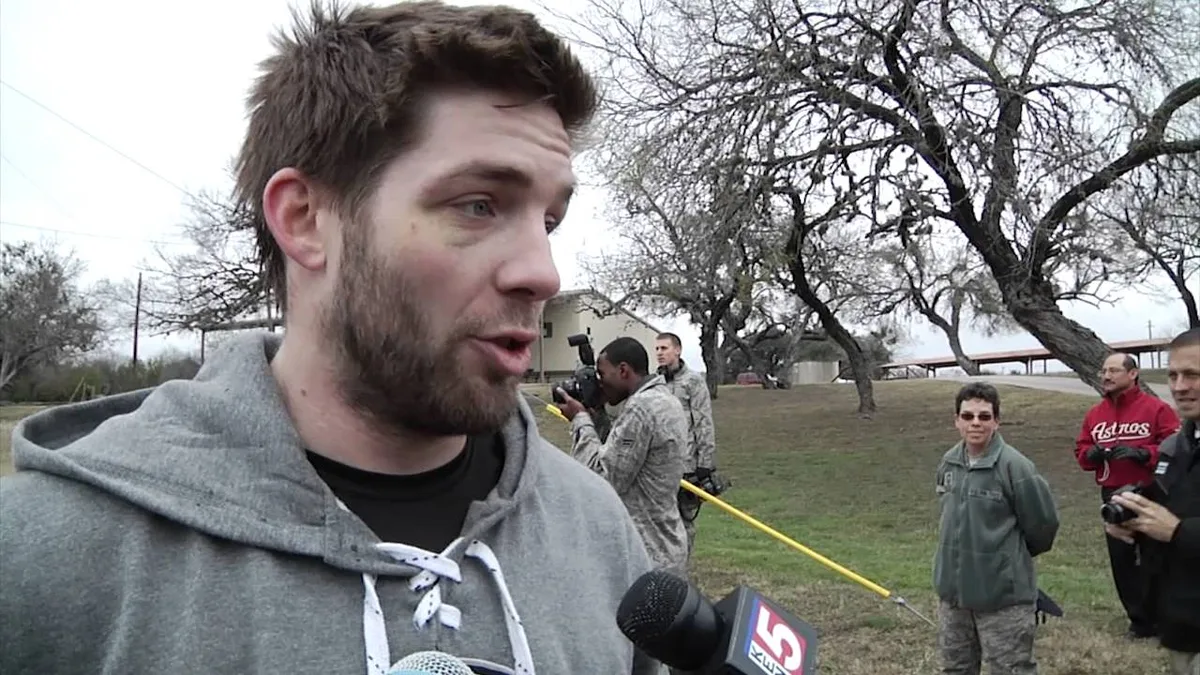
Image source: YouTube / sanantoniorampage (YouTube thumbnail (fair-use with source credit))
Week 0: In-Processing, Haircuts, and Reality Setting In
You arrive at Lackland on a bus. The first 48 hours are a blur of paperwork, medical shots, uniform issue, and the famous zero-buzz haircut. You will barely sleep.
You will stand in lines for hours. This week is designed to strip away individuality and reset your internal clock. There is no PT testing yet.
It is purely administrative chaos with a side of shock.
Red Phase (Weeks 1-2): The Shock of Military Life
Red Phase is the most restrictive part of training. You have limited phone calls, no off-base privileges, and constant supervision. This is where you start doing daily physical training at 5:00 AM.
Runs start short and slow, usually 1 to 2 miles. You also begin learning drill and ceremony. The yelling is loudest here.
Most people who quit do so during Red Phase.
Silver Phase (Weeks 3-4): Weapons, Gas Chamber, and the Obstacle Course
Silver Phase is where the training starts to feel real. You qualify on the M16 or M4 rifle at the firing range. You go through the gas chamber, where you unmask and breathe CS gas.
You hit the obstacle course and the confidence course. PT intensity increases significantly. Runs push toward 3 miles.
The push-up and sit-up standards during practice tests start to reveal who is behind.
This is also when Space Force recruits begin their separate academic blocks. You will study the USSF mission, orbital mechanics at a very basic level, and the history of space operations. The classroom work is not physically hard, but it eats into your free time.
While other flights are resting, you might be studying.
Gold Phase (Weeks 5-6): Space-Specific Academics and Leadership
Gold Phase shifts focus toward leadership. Trainees are assigned to formal leadership positions within the flight, like dorm chief or element leader. You are expected to hold others accountable.
PT continues but the volume plateaus. You should be able to pass the PT test comfortably by now.
For Space Force recruits, this is the most academically intense period. The curriculum dives deeper into space systems, the Space Force organizational structure, and the history of the Space Command. There are written exams.
Failing them can mean recycling, which adds weeks to your training.
BEAST Week: The Field Training Exercise That Weeds People Out
BEAST stands for Basic Expeditionary Airman Skills Training. It is a multi-day field exercise where you live in tents, eat MREs, and simulate deployed conditions. You run security patrols, stand guard duty, and respond to simulated attacks.
Sleep is minimal. The weather in Texas during BEAST is usually hot and humid.
For Guardians, BEAST is the same as for everyone else. You wear the same gear. You dig the same fighting positions.
There is no "space version" of this. If you cannot handle 72 hours of field conditions, you will not graduate.
Final Week: PT Test, Graduation, and What Comes Next
The final week starts with the official Physical Fitness Assessment. You must pass to graduate. The test includes:
- 1.5-mile run (timed)
- Hand-release push-ups (maximum in one minute)
- Cross-legged sit-ups (maximum in one minute)
After the PT test, you face the final uniform inspection and graduation rehearsal. Graduation day is a formal ceremony. Families attend.
You receive your beret and your Space Force patch. Then you immediately receive orders for Tech School.
The Physical Standards: Numbers You Actually Need to Hit
Let's get specific. Vague advice like "be in shape" is useless. Here are the actual numbers as of the most current DOD fitness guidelines.
1.5-Mile Run Time Requirements by Age and Gender
The Air Force and Space Force use the same age and gender adjusted standards. Here is a quick reference for the minimum passing time (age group 17-29):
| Group | Minimum Pass Time |
|---|---|
| Male (17-29) | 13:36 |
| Female (17-29) | 16:22 |
These are the minimums. You do not want to be at the minimum. If you run a 13:35, you barely pass.
Most trainees aim for under 12 minutes to have breathing room. The closer you are to the cutoff, the more stress you feel on test day.
Push-Up and Sit-Up Minimums (With the New Hand-Release Standard)
The Air Force switched to hand-release push-ups several years ago. They are harder than standard push-ups. You go all the way down, lift your hands off the ground, then push back up.
This eliminates the "bouncing" cheat that was common with regular push-ups.
For the same 17-29 age group:
| Component | Male Minimum | Female Minimum |
|---|---|---|
| Hand-release push-ups | 20 | 11 |
| Cross-leg sit-ups | 36 | 36 |
Again, these are minimums. Top performers do 40-50 push-ups and 50-60 sit-ups. The test is one minute per component.
You cannot stop and rest mid-set.
The PT Test Failure Rate Nobody Talks About
Official data from the Air Force BMT public affairs office indicates that roughly 3-5 percent of trainees fail the final PT test on their first attempt. Most who fail get a second chance within one week. A small percentage are recycled to a later flight.
The number who are separated entirely for physical failure is very low, around 1 percent.
But here is the honest truth: the failure rate on the initial diagnostic PT test in week one is much higher. Many recruits arrive unprepared. The diagnostic does not count toward graduation.
It just tells the MTIs who needs extra work. By week seven, most people improve enough to pass. But not everyone.
If you arrive unable to run a mile without stopping, you will struggle.
Where Most Recruits Actually Struggle Physically
In our research, the running component is the most common failure point. Push-ups and sit-ups are easier to improve in seven weeks. Cardiovascular endurance takes longer to build.
If you cannot run 1.5 miles in under 14 minutes before you ship, you are taking a real risk.
The other hidden struggle is injuries. Shin splints and stress fractures are common during BMT because of the sudden increase in running volume on concrete surfaces. Heat injuries also spike during summer months.
Texas in July is brutal. You can train for fitness, but you cannot train for humidity until you experience it.
The Academic Side: Why This Isn't Just a "Fitness Check"
Many people ask if Space Force boot camp is "all classroom" or "mostly book work." That is not correct. The physical training is real and demanding. But the academic side is also a genuine challenge, especially for Guardians.
What Space-Specific Curriculum Looks Like in Basic Training
During the classroom blocks, Space Force recruits study:
- The history of the U.S. Space Command and the transition to the Space Force
- Basic orbital mechanics (understanding low Earth orbit vs. geostationary orbit)
- The functions of satellite ground control stations
- The Space Force organizational structure
- The ethical and legal aspects of space warfare
These are not lightweight high school review sessions. You take written exams. You need a minimum passing score.
Fail the exam and you get remediation. Fail remediation and you can be recycled to a later flight.
How Classroom Pressure Compares to Physical Demands
For some recruits, the classroom is harder than the PT. If you struggled in high school with test taking or memorization, the academic pressure will feel heavier than the run. The MTIs do not go easy on you because it is a written test.
You still get yelled at for a low score. You still get extra duty.
For other recruits, the classroom is a relief. The physically strong but academically average trainee might prefer running to sitting still. The point is: both sides matter.
You cannot coast on one and ignore the other.
Why High ASVAB Scorers Sometimes Struggle More Than Athletes
Here is something counterintuitive. Space Force recruits tend to have higher ASVAB scores. That means they are generally smarter, on paper, than the average recruit.
But many of these recruits are also less physically active. They spent high school in robotics club, not on the track. So they show up academically prepared but physically behind.
The athletes with lower ASVAB scores breeze through PT but struggle in the classroom. Neither group has an easy path. The middle ground, where you are moderately fit and moderately prepared academically, is actually the sweet spot.
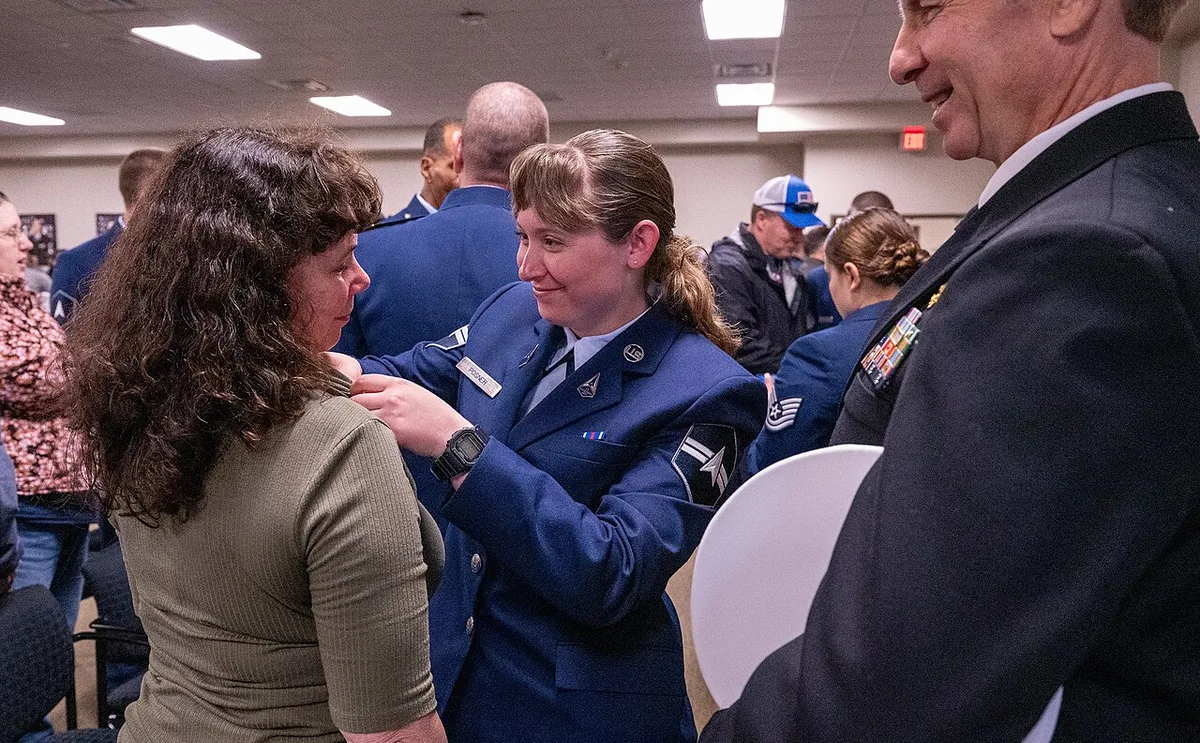
Image source: Wikimedia Commons / Kate E. Anderson